There’s something special about having a cozy little space at home dedicated to reading. It could be beside a sunny window, along a quiet hallway, or tucked into an unused bedroom corner. A home reading corner creates a relaxing escape where you can slow down and enjoy a good book. And you don’t need a large room or an expensive budget to make it happen. With a bit of imagination and a few thoughtful touches, even the smallest nook can become a warm, comfortable retreat for any book lover.

Smart Storage Ideas That Make Your Small Book Corner Work

Keeping a small reading space organized can be challenging when you have a growing book collection and limited room to work with. When every inch matters, the right storage solutions can help you keep your favorite books nearby without making the nook feel crowded. From using vertical space to choosing furniture with hidden compartments, there are plenty of practical ways to keep your reading corner neat and inviting.
Bookshelves are an easy starting point, but traditional bulky shelving isn’t your only option. Wall-mounted shelves or staggered arrangements make excellent use of vertical space while keeping the floor clear. They also give you a stylish way to display your collection without letting books overwhelm the room.
| Storage Solution | Pros | Cons |
|---|---|---|
| Wall-mounted Bookshelves | Makes use of vertical space, customizable, and decorative | Offers less storage and may require additional wall support |
| Floating Shelves | Space-saving, simple, and easy to pair with lighting | Limited storage and weight capacity |
| Hidden Storage Units | Keeps books tucked away while freeing up space | May require custom construction and can be harder to access |
Floating shelves are another practical choice for a compact reading nook. Their streamlined design takes up very little space, and arranging several shelves at different heights can add visual interest. You can also place small lights nearby or underneath the shelves to give your reading corner a softer, warmer atmosphere.
If you prefer to keep your books out of sight, consider storage options such as vintage trunks, built-in cabinets, or window seats with concealed compartments. These solutions can reduce visual clutter while adding character to the space.
Essential Elements Every Cozy Reading Corner Needs
A comfortable reading space doesn’t need dozens of decorative pieces to feel inviting. A few well-chosen essentials can make a much bigger difference. Focus on creating a balance between comfort, practicality, and personality so the corner feels like somewhere you genuinely want to spend time.
When these elements work together, the result is a reading nook that feels comfortable, functional, and personal. It doesn’t have to look perfect. It simply needs to create a quiet little escape where you can relax with a good book.
Choosing the Right Seating for Maximum Comfort

Seating is one of the most important parts of any home reading corner. The right chair or cushion can determine how comfortable you feel after spending an hour or two reading. Think about how you naturally like to sit, how much space you have available, and whether the seating provides enough support.
Here are several comfortable seating options to consider:
- A generously padded armchair paired with an ottoman for a classic reading setup.
- A built-in window seat with comfortable cushions and good back support.
- A hanging egg chair for a playful, enclosed feel.
- A reclining chair that lets you adjust your position while reading.
- Floor cushions or a soft bean bag for a relaxed, informal setup.
Whenever possible, try the seating before committing to it. Consider whether you can comfortably sit in the same position for an extended period without constantly shifting around. Your reading corner should feel effortless and comfortable enough that you can happily spend an entire afternoon there.
The Right Lighting for Long, Comfortable Reads
Good lighting can have a major impact on how enjoyable your reading corner feels. Poor lighting can make it difficult to see the page comfortably and may leave your eyes feeling tired after a long reading session.

A well-designed reading nook benefits from layered lighting. Start with gentle ambient light that brightens the surrounding area, then add a more focused source that illuminates your book without creating harsh glare.
How to Light Up Your Reading Corner
There are several lighting options that work particularly well in small reading spaces. Consider the layout of your nook and choose a combination that provides both comfort and practical illumination.
- Floor lamps with adjustable heads
Position one behind or beside your chair so you can direct the light toward your book. - Table lamps with warm LED bulbs
Place one on a nearby side table for a soft, comfortable glow. - Wall-mounted swing-arm lamps
These are especially useful when floor and table space are limited because they provide focused light without taking up valuable surface area. - Natural light through nearby windows
Daylight can create a pleasant reading environment, while sheer curtains can help reduce glare when needed. - Overhead lights with dimmer switches
These provide general illumination and allow you to adjust the atmosphere when combined with task lighting.
Creative Ways to Store Your Books and Little Extras
Books can quickly accumulate, especially if reading is one of your favorite hobbies. A good storage system should accommodate your collection while also giving you convenient places to keep everyday reading essentials such as bookmarks, glasses, notebooks, and pens.
Choose storage that works with the way you actually use your reading corner. Shelves should leave enough room for your current collection to grow, while baskets, drawers, and storage furniture can keep smaller items from creating visual clutter.
Here are a few storage ideas that can keep your reading space organized without making it feel overly structured:
- Floating shelves mounted at an easy-to-reach height.
- Side tables with drawers for storing bookmarks, reading glasses, notebooks, and other small items.
- Built-in bookcases that can double as subtle room dividers in compact layouts.
- Storage ottomans that provide both seating and concealed storage.
- Magazine racks for current books, magazines, journals, and other frequently used reading materials.
Personalizing Your Reading Space Style
A reading corner should feel like it belongs to you. Beyond choosing furniture that fits the space, think about the colors, materials, accessories, and decorative details that make you feel comfortable.
The goal is to create an area that reflects your personality while remaining practical enough for everyday reading. A few meaningful touches can make the nook feel much more inviting than a space filled with generic decorations.
Choosing Colors and Textures That Inspire

The colors surrounding your reading space can influence its overall atmosphere. Warm, earthy shades can create a cozy and relaxing environment, making them a natural choice for a reading nook.
Deep blues and forest greens can give the space a calm, enclosed feeling that works beautifully for long reading sessions. Rich browns and warm grays can add a more understated and sophisticated look.
For especially small spaces, soft creams and pale pastel shades can help the area feel brighter and more open. You can then introduce personality through a few stronger accent colors in cushions, blankets, artwork, or other small accessories.
Texture is just as important as color. Combining materials such as soft fabrics, woven pieces, plush rugs, and cozy blankets can add depth and make the reading corner feel more comfortable. These small details can turn a simple chair and bookshelf into a space that feels genuinely inviting.
Adding Plants and Natural Elements
A few plants can bring warmth and life to a home reading corner without requiring a major redesign. Greenery can soften the appearance of the space and create a fresher, more relaxed atmosphere.
You don’t need to be an experienced gardener to add plants successfully. Choose low-maintenance varieties that suit the amount of light available in your reading nook.
Here are some easy options to consider:
- Snake plant – A hardy choice that can handle lower light and infrequent watering.
- Pothos – Works well on shelves or in hanging planters and can add trailing greenery.
- ZZ plant – A low-maintenance option with glossy, structured foliage.
- Peace lily – A classic indoor plant that can add a soft, natural touch to the corner.
- Succulents – A good option for bright spaces where plenty of sunlight is available.
There’s no need to fill the entire nook with plants. One or two thoughtfully placed options can be enough. Try positioning a plant on a windowsill, beside your chair, or on a nearby shelf.
Natural materials can complement greenery especially well. A wooden side table, bamboo shelving, woven baskets, or subtle stone accessories can introduce additional warmth and reinforce the natural feel.
Small Space Home Reading Corner Ideas
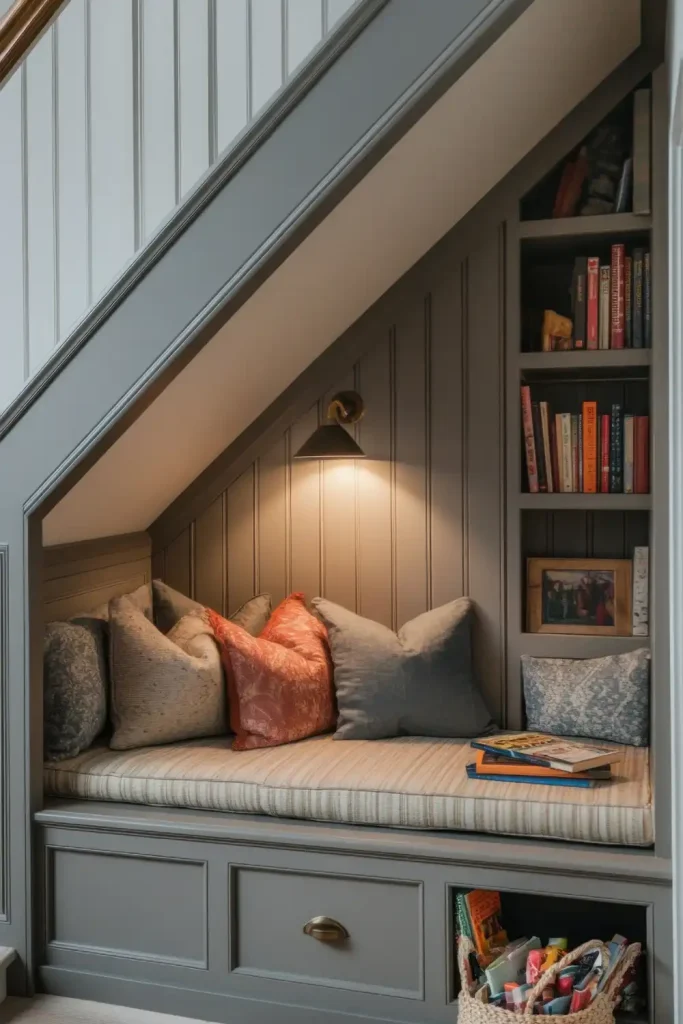
Small rooms can actually be ideal for creating cozy reading corners because they encourage you to make thoughtful use of overlooked areas. An unused corner, hallway alcove, space beneath the stairs, or sunny spot near a window can often become a comfortable reading retreat with just a few additions.
You don’t need a dedicated room or a large floor plan. The key is to work with the space you already have and choose furniture and accessories that fit its proportions.
Maximize the Little Spaces
Some of the smallest areas in a home can become the most inviting. That unused corner near a window or narrow alcove at the end of a hallway may have more potential than you realize.
Start with a comfortable cushion, then layer in a soft throw or blanket to make the area more inviting. A warm wall sconce can provide useful reading light without taking up floor space. Add a small side table—or even a sturdy stack of books—to give yourself somewhere to place a drink or your current read.
Bay windows and architectural nooks are particularly well suited to reading spaces because they already create a natural sense of separation. If there is enough room, add a bench with built-in storage and a few cushions. In tighter areas, a narrow ledge with comfortable pillows can work just as well.
Even a very small area can become a functional reading spot when it is planned thoughtfully. You may only need a few square feet for comfortable seating, adequate lighting, and somewhere to keep your book. What matters most is creating a peaceful space that feels separate from the everyday activity of the home.