Western gothic kitchen design combines the rugged spirit of the American West with the mysterious, dramatic character of gothic interiors. Instead of relying on the usual bright and minimal kitchen style, this approach embraces darker colors, aged materials, ornate details, rustic textures, and atmospheric lighting. These ideas can help create a kitchen that feels distinctive, comfortable, and full of personality.
A Midnight Feast

The Midnight Feast western gothic kitchen combines deep colors, dramatic illumination, and elegant materials to create an intimate setting for cooking and entertaining. Black marble countertops work beautifully with dark wood cabinetry, while vintage silverware, crystal decanters, and antique-inspired accessories add refined character. Wrought iron chandeliers or pendant lights can cast a warm glow across the room, making the kitchen especially inviting during evening gatherings.
Soaring Cathedral Ceilings
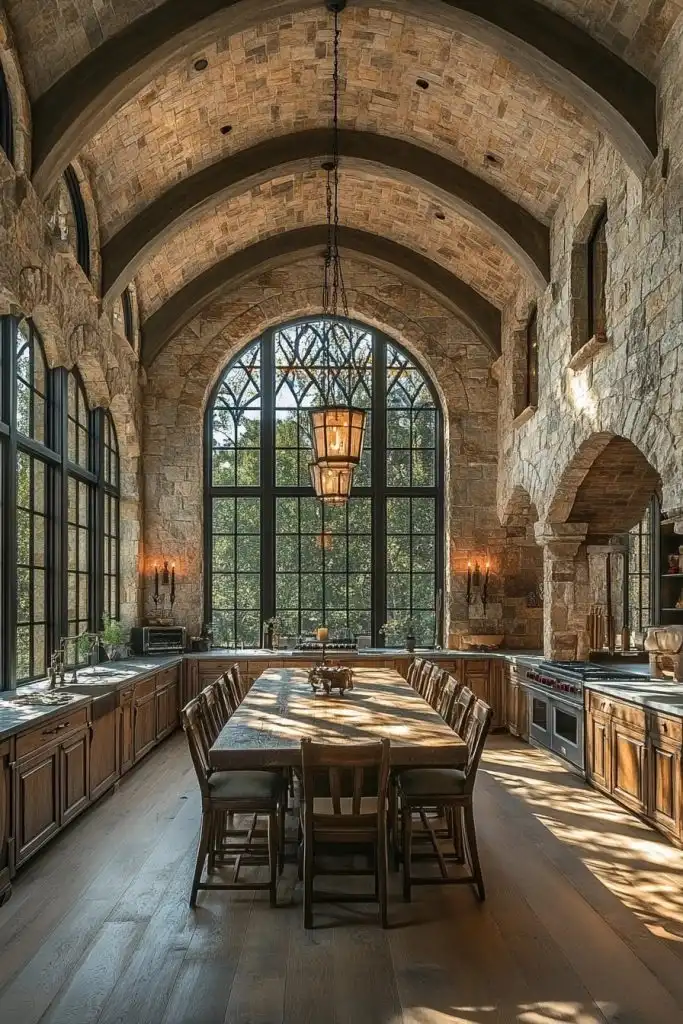
Cathedral ceilings introduce grandeur and architectural drama to a western gothic kitchen. Tall vaulted ceilings, exposed wooden beams, and large arched windows create an impressive sense of height while maintaining a rustic atmosphere. Stained-glass accents can bring subtle color into the room, while medieval-inspired lanterns provide atmospheric illumination. This approach works particularly well in spacious kitchens where architectural details can become a major part of the design.
The Art of Ironwork

Ironwork is an excellent way to bring western and gothic influences together. Custom iron cabinet pulls, pot racks, shelving brackets, faucets, and light fixtures can add strength and visual interest throughout the kitchen. Dark metal contrasts beautifully with natural wood, stone, and lighter surfaces. Ornate iron details can also make practical features feel decorative while giving the room a handcrafted, enduring appearance.
Enigmatic Culinary Realms
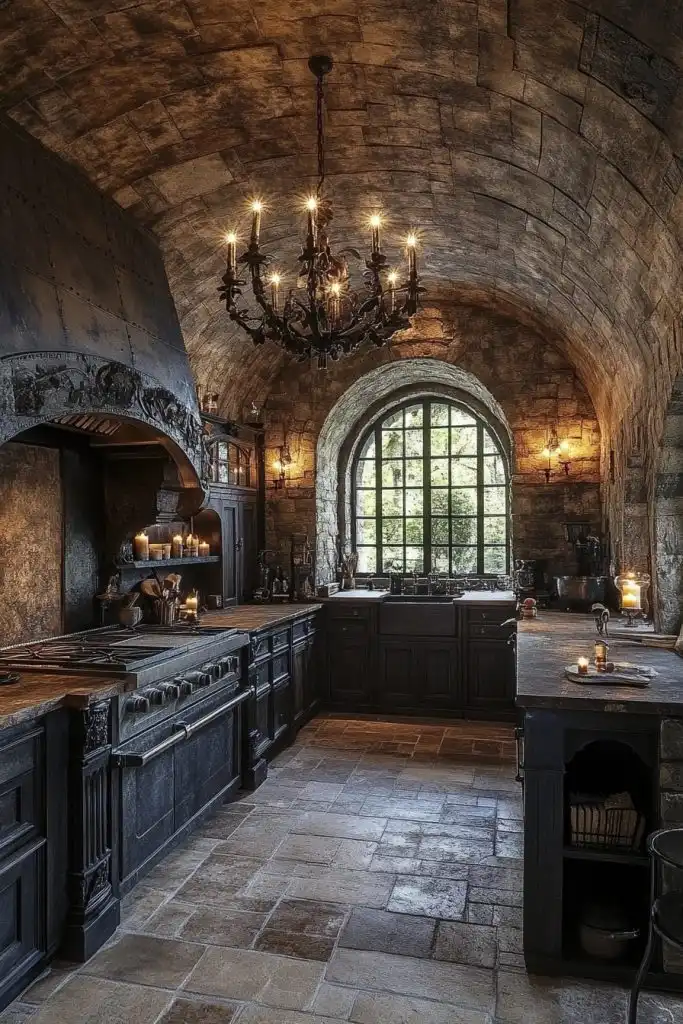
Enigmatic Culinary Realms create a mysterious kitchen atmosphere while keeping everyday functionality at the forefront. Hidden storage areas, concealed pantry doors, aged wooden cabinetry, and stone surfaces can establish an old-world feeling. Modern appliances can remain discreetly integrated so they do not overpower the vintage character. Small decorative details, such as symbolic patterns or antique-inspired accessories, can add personality without making the room feel overly themed.
Timeless Victorian Veneers
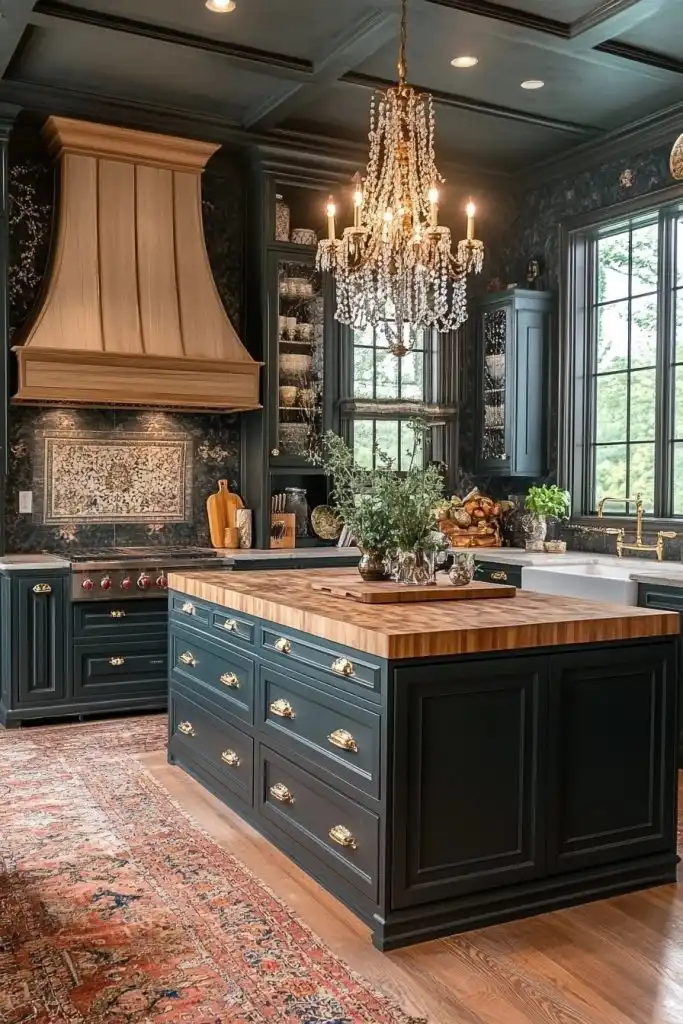
Timeless Victorian Veneers bring sophisticated historical character to a western gothic kitchen. Ornate wooden cabinetry, deep colors, patterned fabrics, and antique furniture can create an elegant foundation. A vintage hutch, credenza, or display cabinet can provide additional storage while strengthening the traditional aesthetic. Brass and copper hardware introduce warm metallic highlights that complement dark woods and rich colors beautifully.
The Elegance of Baroque Banquets
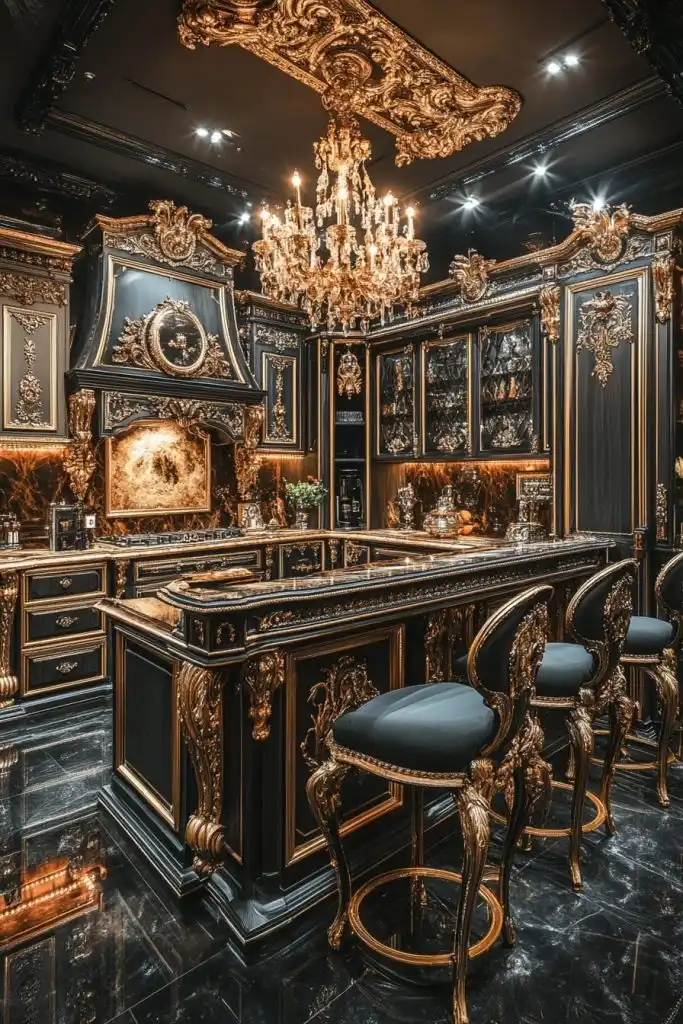
The Elegance of Baroque Banquets is ideal for anyone who wants a dramatic kitchen designed around memorable dining experiences. A large decorative table, high-backed chairs, luxurious curtains, and elaborate lighting can establish a grand atmosphere. Gold or silver accents add sophistication, while deep burgundy, plum, or other rich shades give the space additional depth. The result is a kitchen that feels ready for elaborate meals and candlelit gatherings.
Brews of the Medieval Era
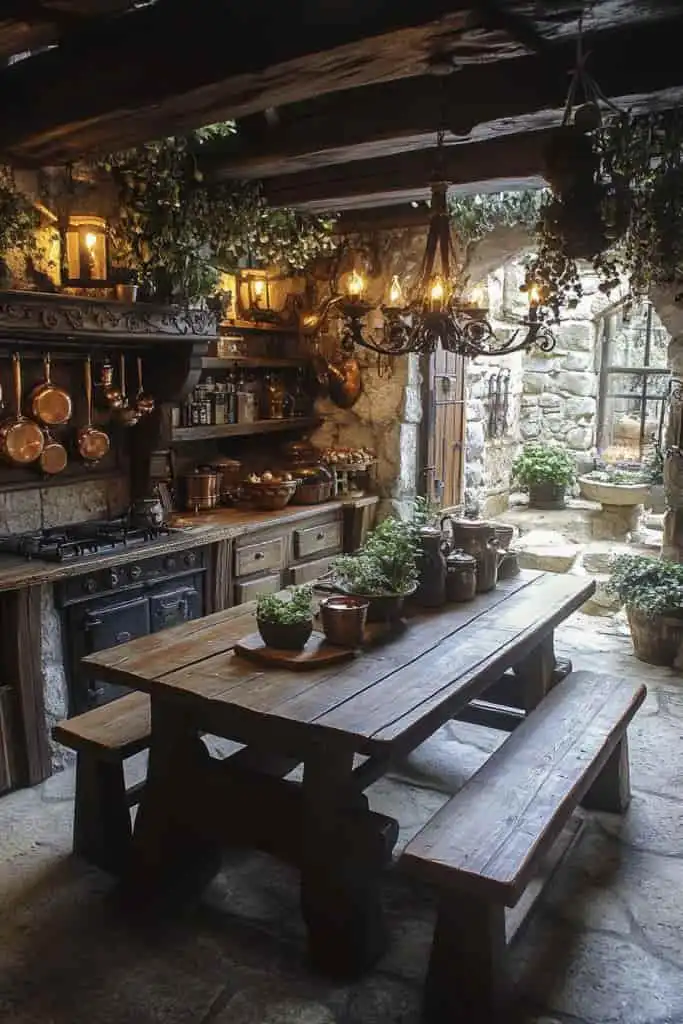
Brews of the Medieval Era draws inspiration from rustic castle kitchens and traditional craftsmanship. A substantial range hood, hearth-inspired cooking area, or wood-fired oven can become a strong focal point. Rough stone walls and exposed timber beams reinforce the historic appearance, while concealed modern appliances preserve contemporary convenience. Hand-forged metal accessories and hanging bundles of herbs can complete the rustic medieval atmosphere.
Phantom’s Pantry

Phantom’s Pantry adds mystery to the western gothic kitchen through concealed storage and atmospheric decoration. Hidden doors, sliding panels, dark cabinetry, and low-level lighting can create a secretive feeling. Gothic arches and reflective surfaces give cabinets and shelving additional visual interest. Vintage apothecary containers and antique-style bottles can be displayed as decorative pieces, creating an intriguing connection to old-world kitchens.
Spaces of Spectral Nature
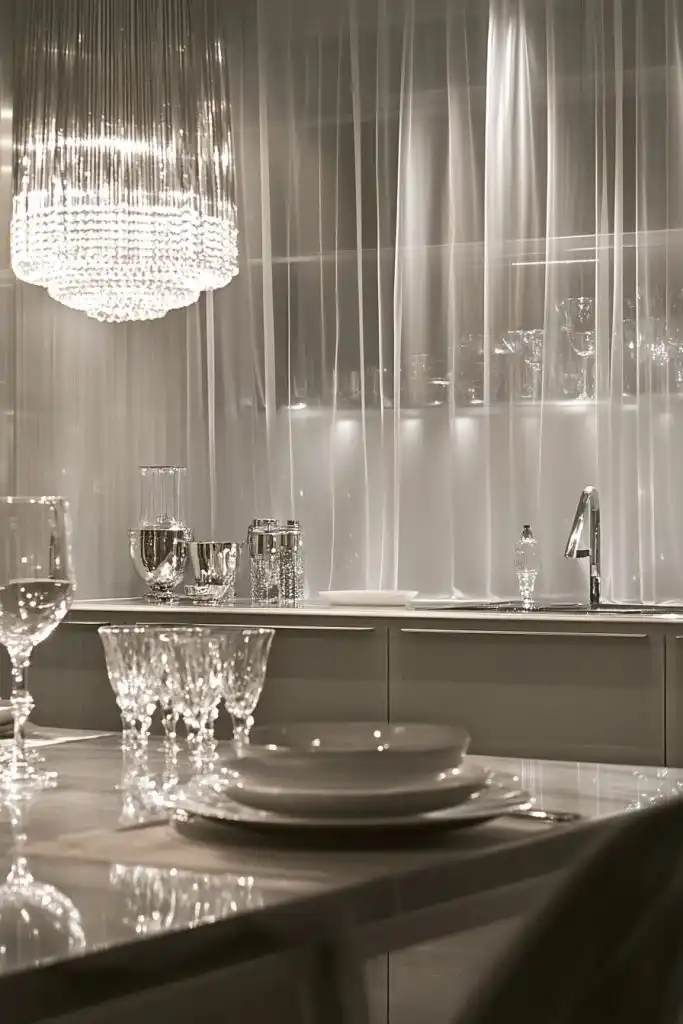
Spaces of Spectral Nature take a softer approach to gothic design by using translucent materials and muted shades. Frosted glass cabinet doors, pale marble, and delicate lighting can create an almost dreamlike atmosphere. Under-cabinet illumination adds warmth without overwhelming the subtle appearance. Vintage artwork, unusual mirrors, and delicate decorative pieces can introduce a slightly mysterious quality while keeping the overall kitchen elegant.
Dining in the Dungeon

Dining in the Dungeon transforms the kitchen into a fortress-inspired gathering space. Rough stone, heavy timber, and dark metal create a strong foundation, while a substantial dining table becomes the central feature. Iron-framed chairs or benches reinforce the rugged character. Wrought iron chandeliers, timber beams, and warm candle-style lighting can make the room feel like a historic stronghold while still providing a welcoming environment for meals.
The Witch’s Workshop
The Witch’s Workshop combines mystical details with practical kitchen features. Open shelves can display jars filled with herbs, spices, and dried ingredients, while cabinetry can provide discreet storage for cooking equipment. Moon, star, botanical, or celestial patterns can add decorative interest to walls and backsplashes. A rustic range or vintage-inspired cooker paired with an antique-style pot can serve as the centerpiece of this imaginative design.
The Gargoyle’s Watchful Guard
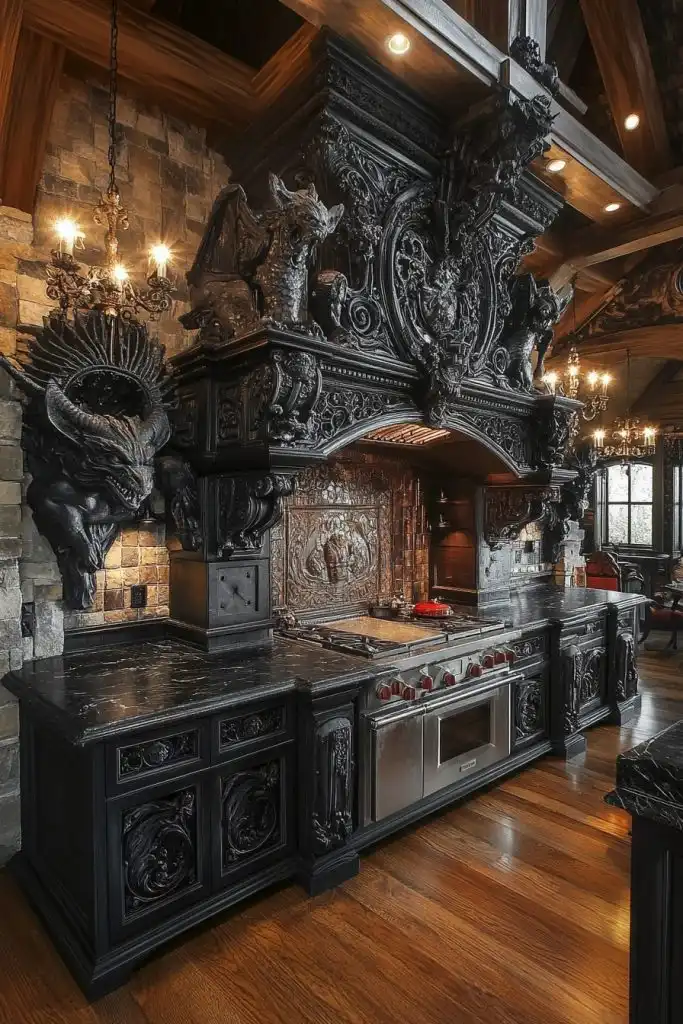
The Gargoyle’s Watchful Guard introduces an architectural and mythical character into the kitchen. Small gargoyle-inspired sculptures can be positioned on shelves, cabinets, or nearby architectural features without overwhelming the space. Stone-effect flooring and countertops reinforce the ancient aesthetic, while subdued lighting creates interesting shadows. This idea works well for homeowners who want their western gothic kitchen to feel mysterious, historic, and highly distinctive.
Black Magic Kitchens

Black Magic Kitchens focus on a bold and sophisticated palette built around black surfaces and dramatic contrasts. Black cabinetry, countertops, appliances, and hardware can create a unified appearance, while pewter, silver, or aged-metal accents provide subtle variation. Pointed arches, decorative glass, and gothic-inspired hardware can strengthen the theme. The key is to balance the darker elements with thoughtful lighting so the kitchen remains practical and inviting.
The Haunted Hearth

The Haunted Hearth brings an old-world fireplace atmosphere into the kitchen. A vintage-style hearth or fireplace-inspired cooking area can become an impressive focal point, particularly when surrounded by aged materials and traditional accessories. Antique utensils, weathered furniture, old-fashioned artwork, and warm candle-style lighting can create a sense of history. The result is a kitchen that feels as though it carries stories from another era.
Enchanting Chill

Enchanting Chill combines luxurious furnishings with subtle gothic drama. Crystal decanters, velvet seating, decorative candelabras, and ornate accessories can give the kitchen a refined character. Vintage mirrors can reflect soft lighting and make the room appear more layered and atmospheric. Rich materials and carefully selected decorative accents allow the kitchen to feel luxurious without losing the darker personality associated with western gothic interiors.
Gothic Elegance
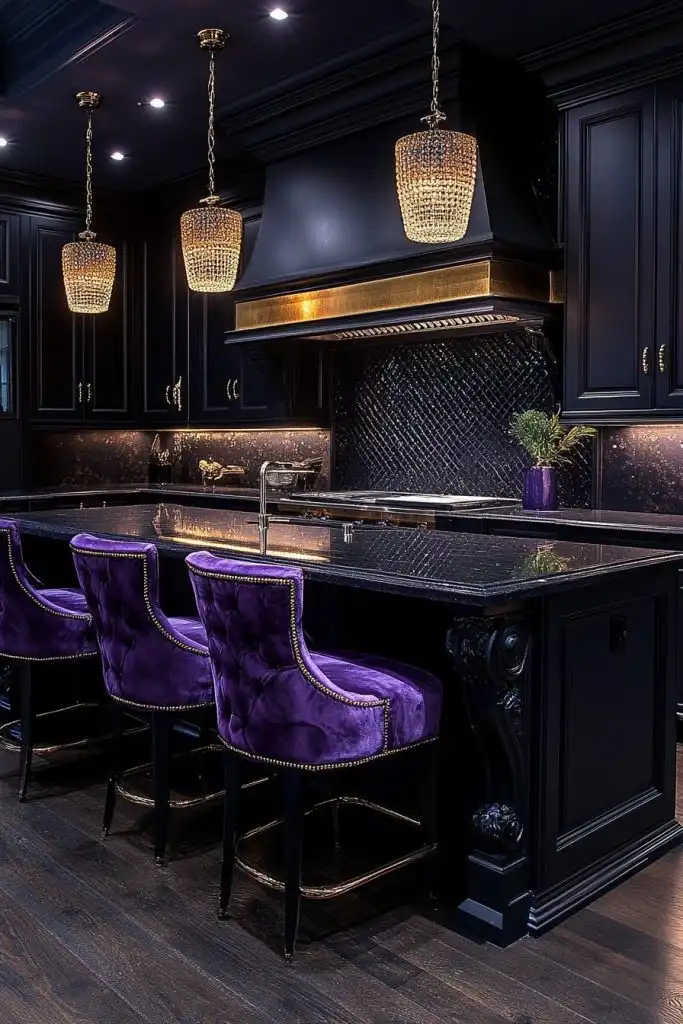
Gothic Elegance focuses on sophisticated materials, dramatic furnishings, and rich textures. Deep-toned upholstery, statement chandeliers, marble countertops, and dark polished wood can establish an upscale foundation. Velvet-inspired textiles or dramatic wall coverings can add softness and visual depth. By combining these decorative features with modern storage and appliances, homeowners can achieve a kitchen that feels theatrical while remaining functional for everyday use.
Wickedness in the Wild West
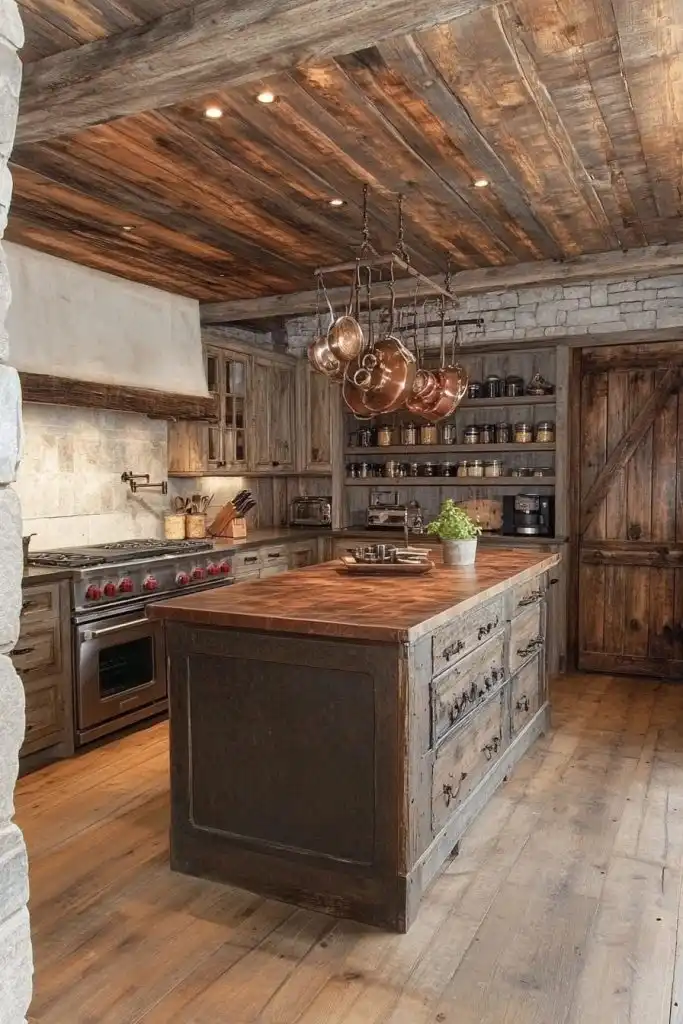
Wickedness in the Wild West combines frontier-inspired materials with darker gothic details. Weathered timber, aged leather, rustic metal, and distressed finishes create the western foundation. Horseshoes, vintage lanterns, cowboy-inspired accessories, and other subtle frontier references can add personality. Dark cabinetry and atmospheric lighting then introduce the gothic side of the design, creating a kitchen that feels rugged, distinctive, and full of character.
Raven’s Roost

Raven’s Roost takes inspiration from the dark beauty and symbolism associated with ravens. Black cabinetry, dark countertops, glossy surfaces, and textured materials can establish the foundation. Raven artwork, sculptural decorations, or feather-inspired patterns can be introduced in small amounts to reinforce the concept. Keeping these details selective allows the kitchen to feel sophisticated rather than overly themed while still celebrating the mysterious character of the raven.
Dark Delights

Dark Delights brings the visual drama of film noir into the western gothic kitchen. A monochromatic palette can be paired with retro furniture, patterned flooring, vintage signage, and classic-inspired accessories. Black-and-white tiles and diner-style seating can create a nostalgic atmosphere, while darker cabinetry keeps the room connected to gothic design. This combination is especially effective for kitchens where vintage charm and dramatic styling are equally important.
Haunting Elegance

Haunting Elegance balances luxurious decoration with a mysterious atmosphere. Crystal lighting, elegant sculptures, fine dishware, and deep colors can create an impressive backdrop for cooking and entertaining. Carefully positioned lighting keeps the room atmospheric without making it feel gloomy. Antique-inspired artwork and subtle decorative accents can add personality, giving the kitchen a refined appearance with a slightly mysterious edge.
Tombstone Tables Explained
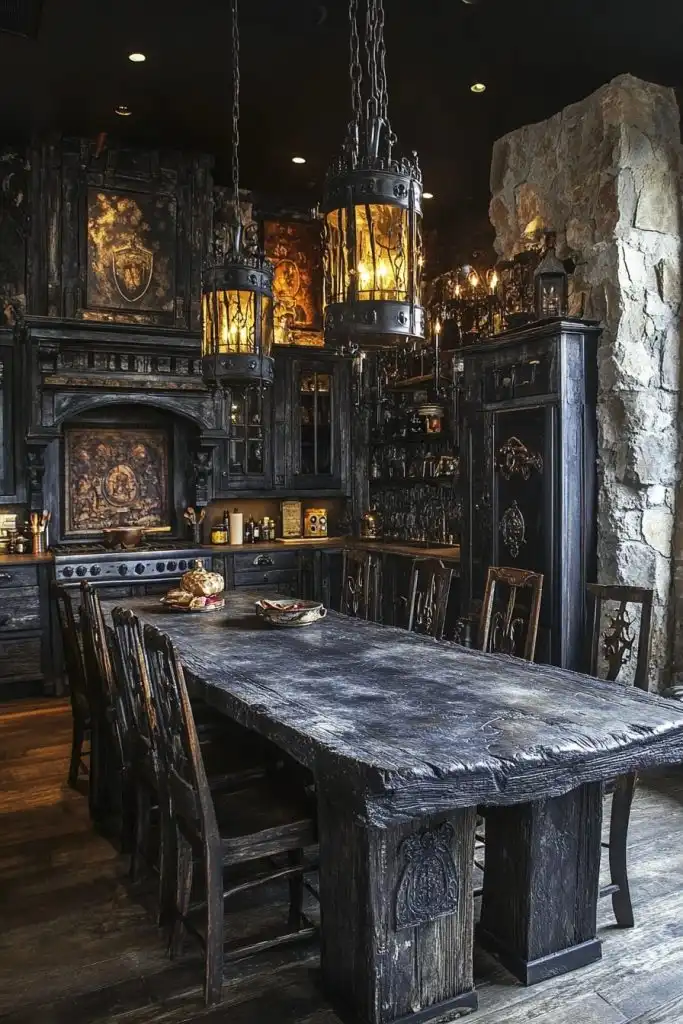
Tombstone Tables introduce a bold stone-inspired element into a western gothic kitchen. A substantial island or dining table made from stone, concrete, or a convincing stone-look material can become the room’s central feature. Gothic lettering or decorative engraving can provide a distinctive finish without dominating the design. Pairing the table with wooden seating and wrought iron lighting reinforces the combination of rustic western character and gothic architecture.
Enchanted Eats

Enchanted Eats introduces celestial and mystical elements into everyday kitchen design. Star maps, zodiac-inspired artwork, moon motifs, and symbolic patterns can be used across walls, textiles, or decorative pieces. A dark backsplash with subtle reflective qualities can resemble a night sky, while metallic accents add a gentle glow. This approach is perfect for creating a kitchen that feels imaginative without sacrificing practicality.
The Wardrobes of Wizards

The Wardrobes of Wizards use cabinetry as an opportunity to introduce an old-world, magical appearance. Storage units can be designed to resemble antique bookcases, apothecary furniture, or traditional wooden cupboards while discreetly concealing modern appliances. Carved details, dark finishes, and hidden compartments can add to the sense of mystery. This approach allows practical kitchen storage to become an important decorative feature.
Gourmet Gothic
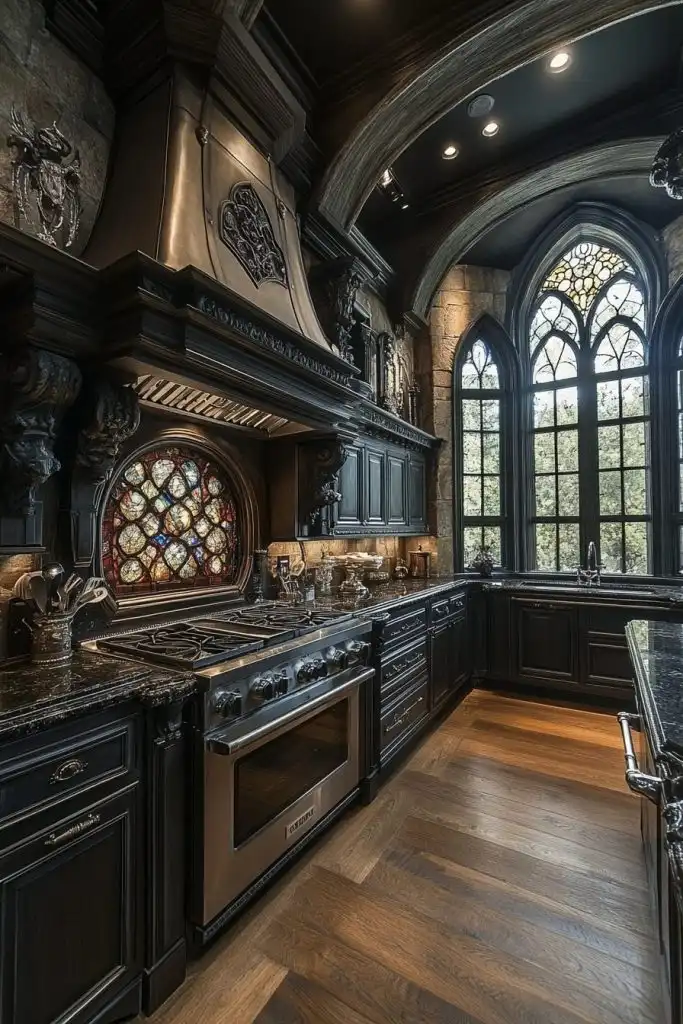
Gourmet Gothic transforms the kitchen into a dramatic culinary retreat inspired by elegant historic dining spaces. Deep colors, luxurious materials, decorative hardware, and substantial furniture establish a sophisticated atmosphere. A large range hood can act as a statement feature, while ornate utensils and carefully chosen accessories reinforce the theme. The design works particularly well for people who want their kitchen to feel both theatrical and welcoming.
Enchanting Backsplashes
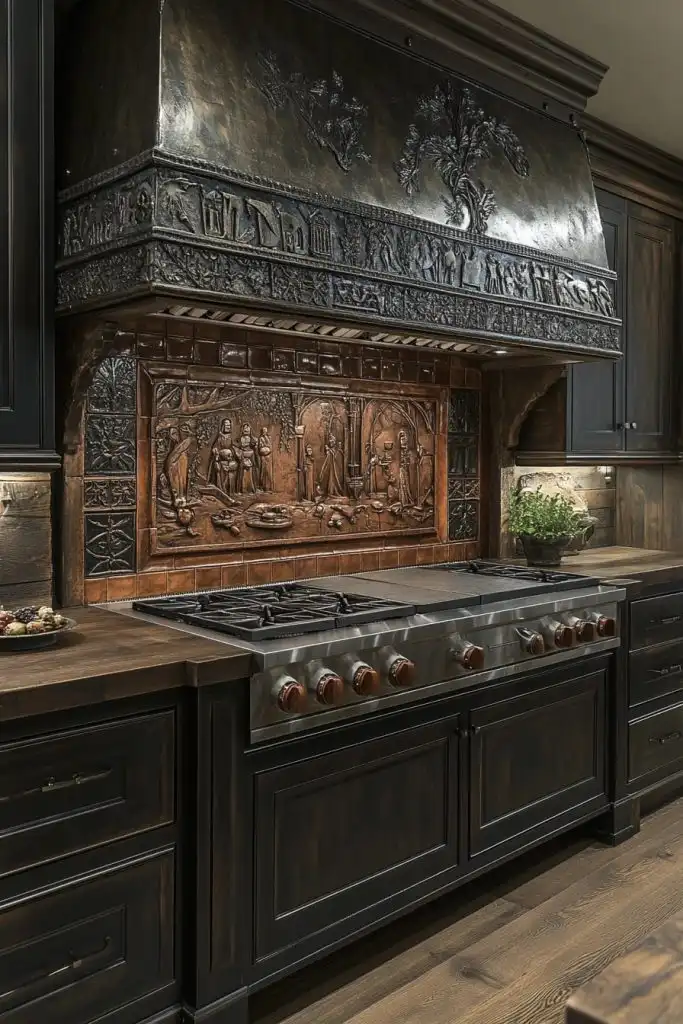
Enchanting Backsplashes can become the artistic centerpiece of a western gothic kitchen. Decorative tiles featuring gothic arches, botanical forms, symbolic patterns, or other dramatic motifs can add personality behind the stove or along the main counter. Dark grout can emphasize individual tile shapes, while glossy or reflective finishes can bounce light around the room. Because the backsplash occupies a defined area, it is an effective way to experiment with gothic styling without redesigning the entire kitchen.
The Nightshade Nook
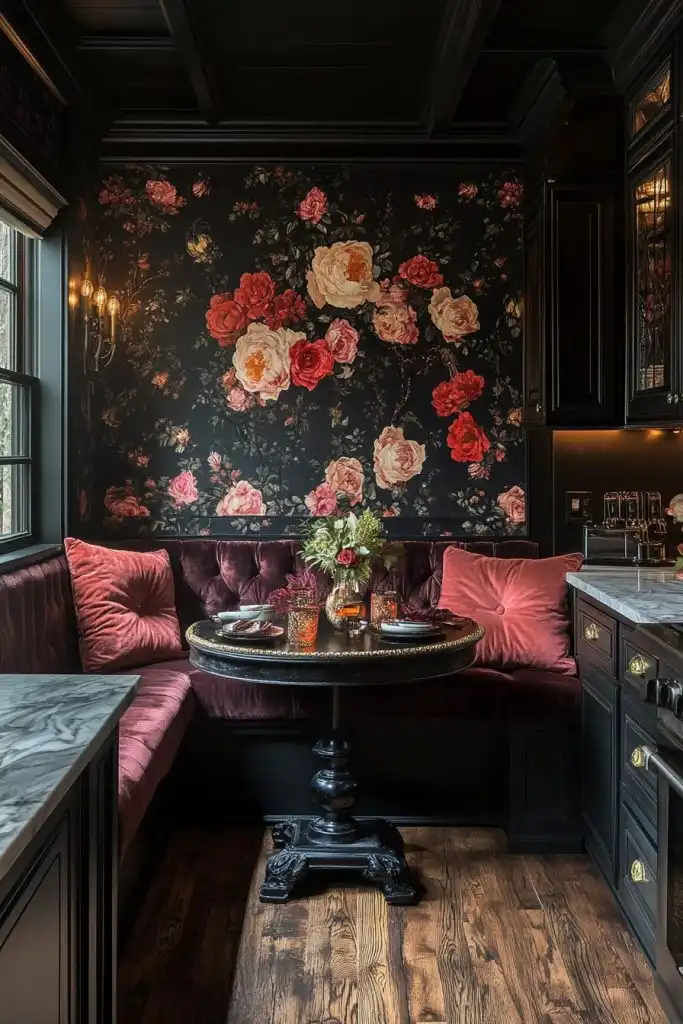
The Nightshade Nook creates a cozy corner within the kitchen for quiet breakfasts, coffee, reading, or relaxed conversations. Deep colors, comfortable seating, soft cushions, and warm ambient lighting can make the area feel secluded and inviting. Botanical artwork featuring dark plants or moody floral patterns can strengthen the western gothic aesthetic. This idea is especially useful in larger kitchens where an unused corner can be transformed into a comfortable retreat.