Ever looked around your kitchen and felt that one detail was missing? Your cabinets may be beautiful, your countertops may be exactly what you wanted, and your appliances may be up to date, yet the room can still feel a little unfinished.
Sometimes, you don’t need a complete kitchen renovation to change that feeling. One carefully chosen design feature can make a surprisingly big difference. A hood vent cover is one of those details.
A range hood has an important practical job, but it doesn’t have to look purely functional. With the right material, shape, color, and finish, the cover can become a beautiful focal point that makes the entire kitchen feel more intentional and custom.
Below are inspiring hood vent cover ideas for different decorating styles, from sleek contemporary designs and warm farmhouse finishes to artistic statement pieces and smart integrated solutions.
The Transformative Power of a Kitchen Hood Vent Cover
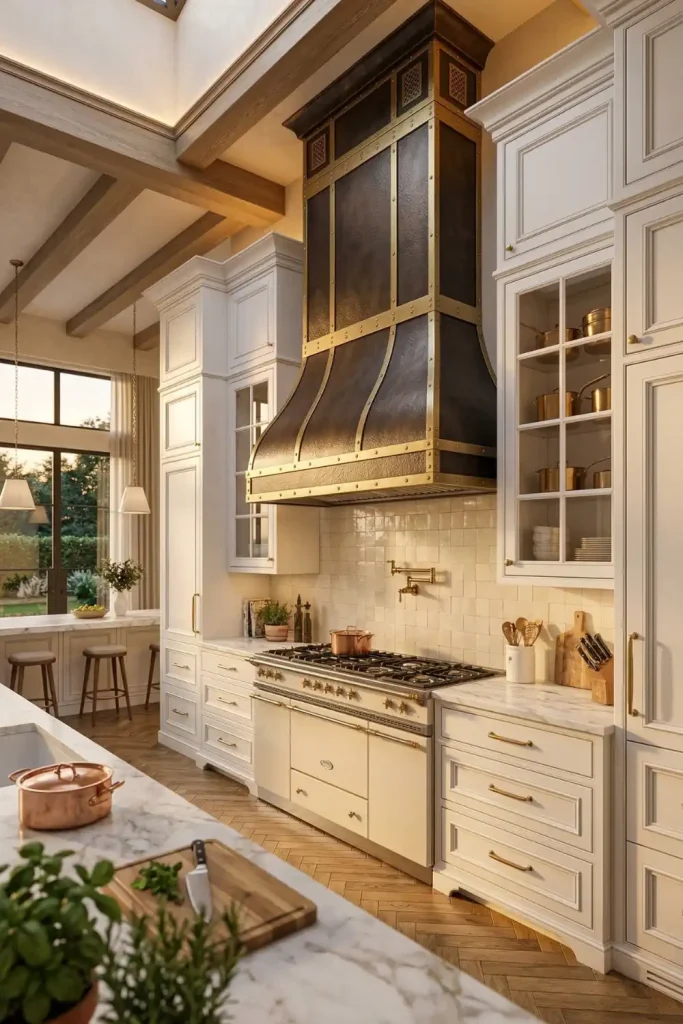
What if one relatively simple change could make your kitchen feel more polished while also supporting better ventilation? The answer may be sitting directly above your cooktop.
A kitchen hood vent cover can become one of the strongest visual features in the room. Because it sits above the range, it naturally draws attention upward and creates a strong vertical point of interest.
It can also help establish the overall character of your kitchen. A streamlined metal design can reinforce a contemporary style, while reclaimed wood can introduce warmth and rustic charm. Decorative tile, plaster, copper, and custom metalwork can take the design in completely different directions.
The visual benefit is only part of the story. Standard ventilation equipment can sometimes look bulky or industrial. A well-designed cover can conceal ductwork and mechanical components, helping the hood blend naturally with cabinetry and surrounding finishes.
At the same time, the ventilation system still needs to perform its essential job. It should help remove smoke, cooking odors, grease particles, and excess moisture from the kitchen.
That is why the best hood vent cover combines appearance with practicality. The cover should complement the ventilation insert rather than interfere with its performance.
This makes the hood one of the most useful areas to consider when refreshing your kitchen. You are not necessarily changing the entire room. Instead, you are giving an important functional feature a more deliberate design treatment.
Ready to discover the perfect hood vent cover for your kitchen? These ideas can help you find a direction that fits your home, cooking habits, and personal style.
Exploring the Versatility of the Hood Vent Cover
The vent hood above your stove does not have to be an ordinary appliance hidden in the background. With the right decorative treatment, it can become a centerpiece that ties the entire kitchen together.
Different materials and finishes can create completely different moods. A few foundational styles demonstrate just how flexible a hood vent cover can be.
Brushed Stainless Steel Sleekness
Reclaimed Wood Beam Charm
Hand-Painted Tile Mosaic
Brushed Stainless Steel Sleekness
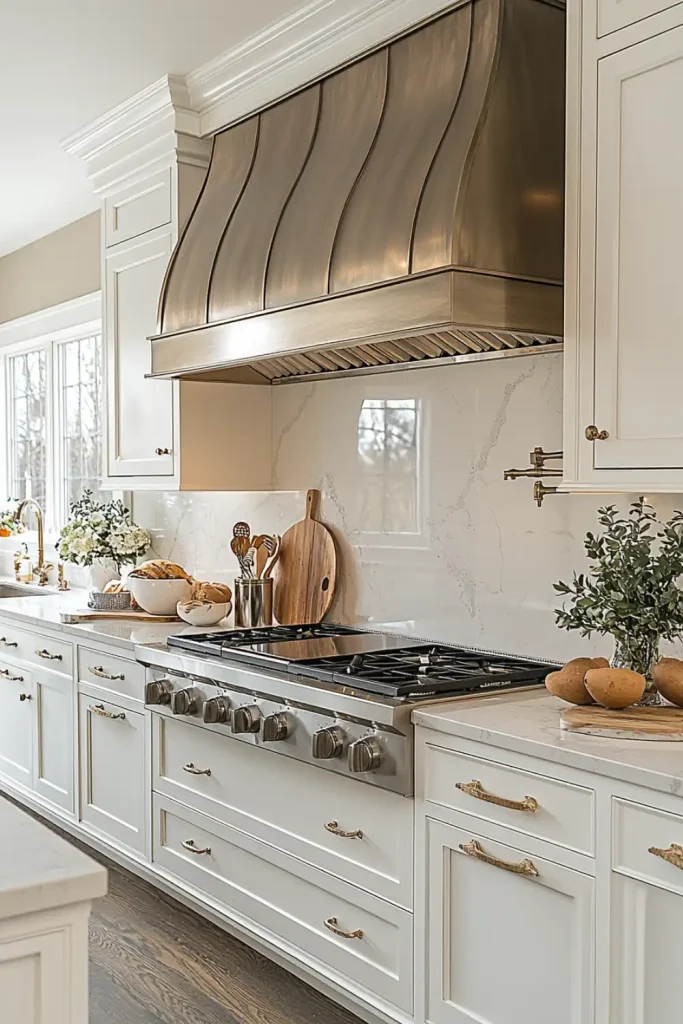
This finish remains popular because it combines a professional appearance with everyday practicality.
The Look
Picture a smooth stainless steel surface with a subtle brushed texture. It catches light gently without appearing overly reflective. The neutral metallic tone works especially well alongside stainless steel appliances and contemporary cabinetry.
Why It Works
Brushed stainless steel is durable, practical, and relatively simple to maintain. Its understated appearance can complement white, gray, black, wood, or colorful kitchen finishes.
It also creates a professional cooking environment without making the hood feel overly decorative.
Reclaimed Wood Beam Charm
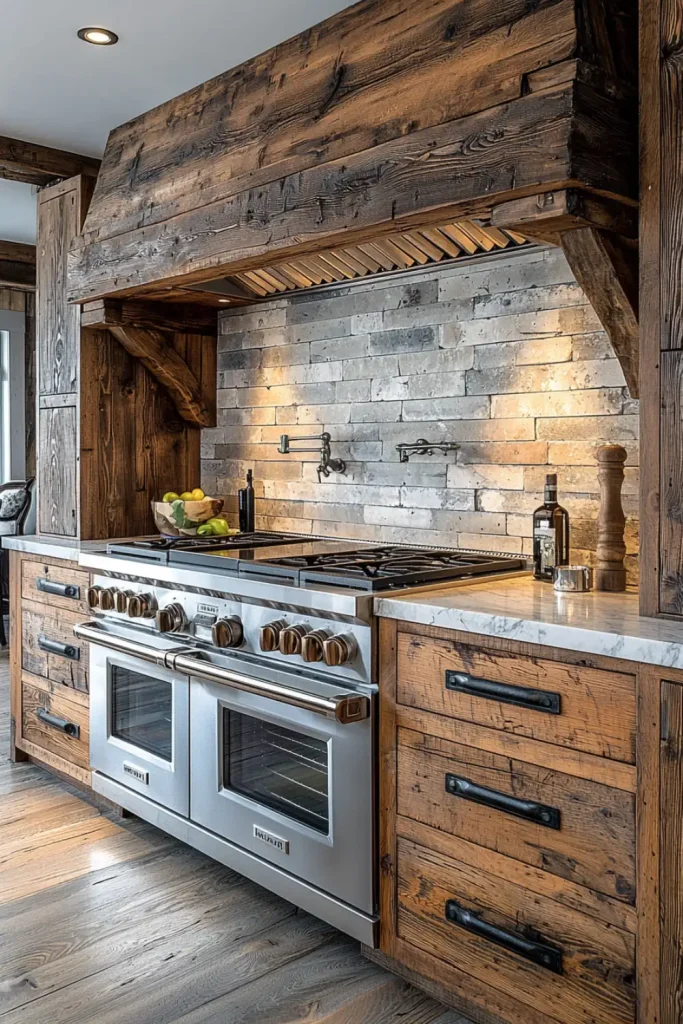
Natural wood can completely change the mood of a kitchen. A reclaimed beam treatment adds texture, warmth, and a sense of history.
The Look
Imagine a substantial wooden structure positioned above the cooking area. Depending on your preference, it could feature dark walnut tones, warm oak, weathered barnwood, or a naturally aged finish.
Visible grain, knots, nail marks, and subtle imperfections can make the material feel authentic rather than mass-produced.
Why It Works
Wood introduces softness and warmth, especially when the surrounding kitchen contains cooler materials such as stone, concrete, or metal.
It works beautifully with farmhouse, rustic, cottage, and cabin-inspired interiors. A properly finished wood hood can become a welcoming focal point while giving the kitchen a more handcrafted character.
Hand-Painted Tile Mosaic
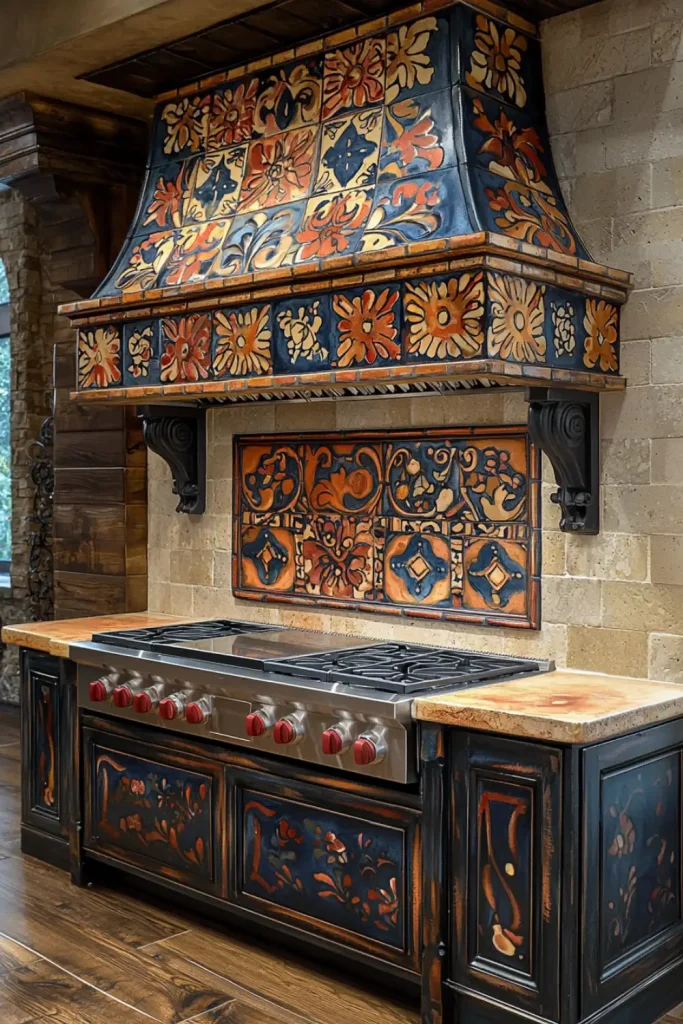
For homeowners who want color and individuality, a hand-painted tile treatment can turn the hood into an artistic feature.
The Look
Imagine decorative tiles arranged into a floral, geometric, Mediterranean, botanical, or custom pattern. The colors can coordinate with the backsplash or deliberately contrast with it.
Because the pattern can be selected specifically for the kitchen, the result can feel highly personalized.
Why It Works
Tile provides almost unlimited opportunities for customization. It can introduce color, texture, and visual interest without requiring a complicated structural change.
A carefully selected mosaic can also connect the hood with other elements throughout the room, creating a cohesive design story.
Modern & Sleek Hood Vent Cover Ideas
If your kitchen favors clean lines, simple shapes, and contemporary finishes, these kitchen oven hood ideas can help create a polished modern appearance.
The goal is usually to keep the design visually simple while allowing materials and proportions to make an impact.
Integrated Matte Black Slab
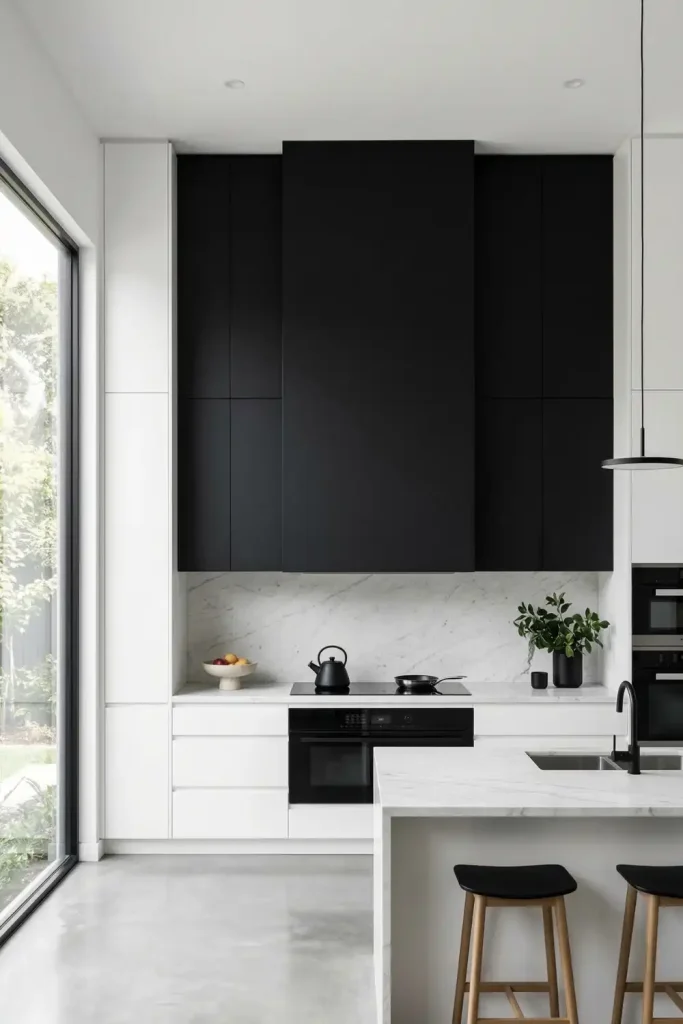
This approach gives the range hood a bold architectural presence while keeping the overall design minimal.
The Look
Picture a broad matte-black panel positioned above the cooking area. The surface is simple, with little or no decorative detailing.
The dark finish creates a dramatic contrast against light cabinetry, marble, quartz, or pale tile.
Why It Works
Creates a Powerful Focal Point: The deep color naturally attracts attention and gives the cooking area visual weight.
Enhances a Minimalist Layout: A simple slab can make the hood feel like an intentional architectural element rather than a separate appliance.
Pairs Beautifully with Contrast: Matte black works particularly well with white cabinets, natural wood, light stone, and colorful backsplashes.
Glass and Chrome Geometric Design
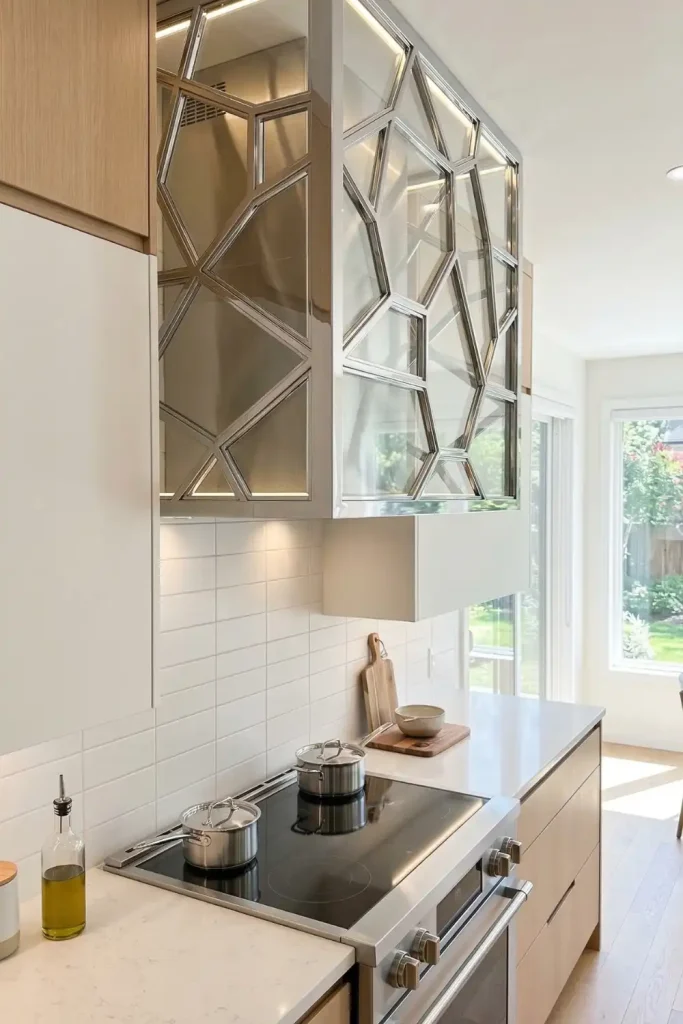
Glass and chrome can create a lighter, almost architectural appearance.
The Look
A chrome framework combined with glass panels can incorporate geometric forms such as straight lines, angular shapes, or subtle hexagonal details. The transparency prevents the hood from appearing visually heavy.
Why It Works
Adds Light and Airiness: Glass can make the hood appear less bulky, which is particularly useful in smaller kitchens.
Easy to Clean: Smooth glass surfaces are generally straightforward to wipe down, while polished metal provides a crisp finish.
Reflects Light: Metallic surfaces can bounce light around the room and contribute to a brighter appearance.
Flush-Mounted Stainless Steel

This design takes inspiration from professional kitchens and emphasizes efficiency and precision.
The Look
The hood sits neatly within or alongside surrounding cabinetry, creating a streamlined appearance. Controls and filters remain accessible while the overall structure stays visually restrained.
Why It Works
Maximizes Space: A compact installation can help the kitchen feel more open.
Offers Professional Appeal: Stainless steel gives the cooking area a restaurant-inspired appearance.
Simplifies Cleaning: A straightforward design leaves fewer decorative recesses where grease and dust can accumulate.
Backlit Frosted Acrylic Panel
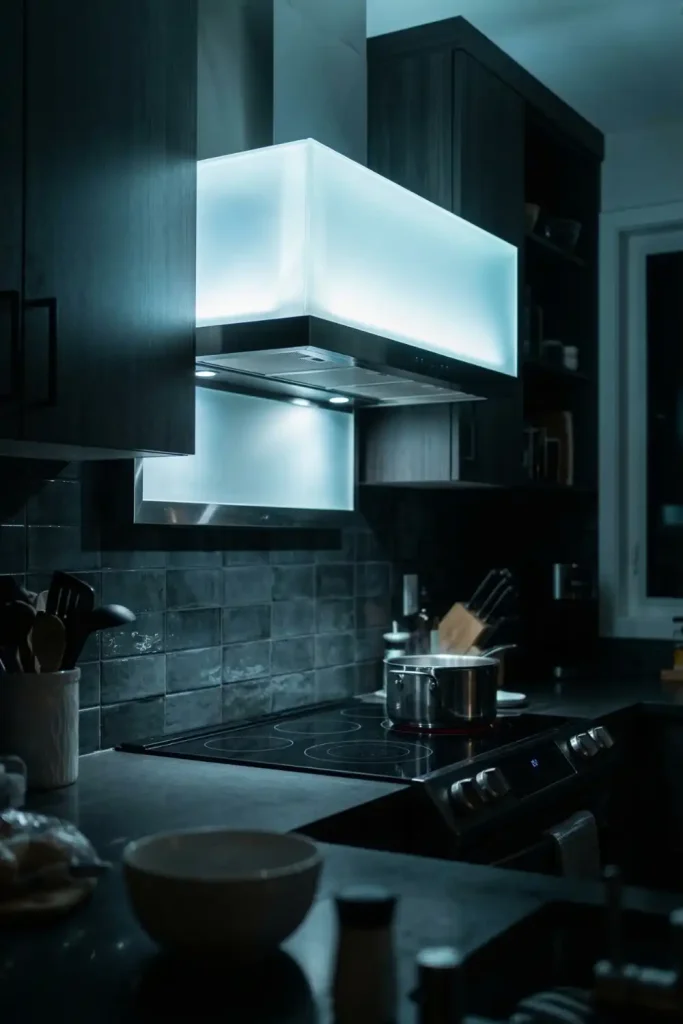
A backlit panel can turn the hood into both a functional appliance and a lighting feature.
The Look
A frosted acrylic or glass surface is combined with concealed LED lighting. The illumination creates a soft glow around or through the panel.
Why It Works
Provides Task Lighting: Properly positioned lighting can make the cooking surface easier to see.
Sets a Mood: Soft illumination can create a relaxed atmosphere during evening hours.
Acts as a Night Light: A low setting can provide subtle illumination when the kitchen is otherwise dark.
These kitchen oven hood ideas demonstrate that modern design does not have to sacrifice practicality.
Rustic & Natural Hood Vent Cover Ideas
Rustic hood vent covers bring warmth, texture, and character into the cooking space. These designs often rely on natural materials and handcrafted details rather than highly polished finishes.
If you love farmhouse, cottage, country, or rustic interiors, these oven range hood ideas can help create a kitchen that feels comfortable and timeless.
Live Edge Wood Slab
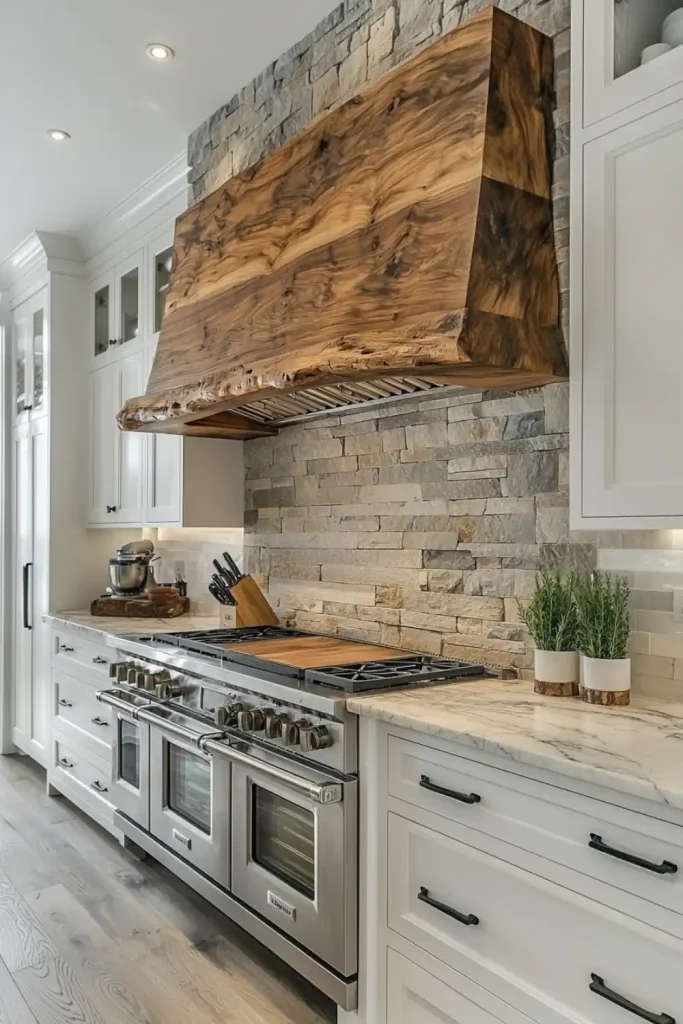
A live edge wood slab brings natural character directly into the kitchen. Its irregular edge follows the shape of the original tree, creating a sculptural appearance.
The Look
Picture a substantial walnut, oak, or cedar slab with visible grain, knots, and natural contours. The surface can be finished with a protective coating while retaining the beauty of the wood.
Why It Works
Every piece of natural wood is different, making the hood feel highly individual. The material adds warmth and works especially well with stone counters, iron hardware, exposed shelving, and other natural finishes.
A properly sealed surface can also be practical for everyday maintenance.
Corrugated Metal Farmhouse Style

Corrugated metal delivers a practical farmhouse appearance with a hint of industrial character.
The Look
Classic ribbed metal panels can be finished in galvanized silver, matte black, or another weathered-looking finish. Visible seams and fasteners can reinforce the utilitarian character.
The material pairs naturally with open shelving, shaker cabinets, farmhouse sinks, and reclaimed wood.
Why It Works
Corrugated metal is durable and visually distinctive. Its texture adds interest without requiring elaborate ornamentation.
It is particularly effective in modern farmhouse kitchens where rustic materials need to coexist with contemporary appliances and clean cabinetry.
Whitewashed Brick Veneer
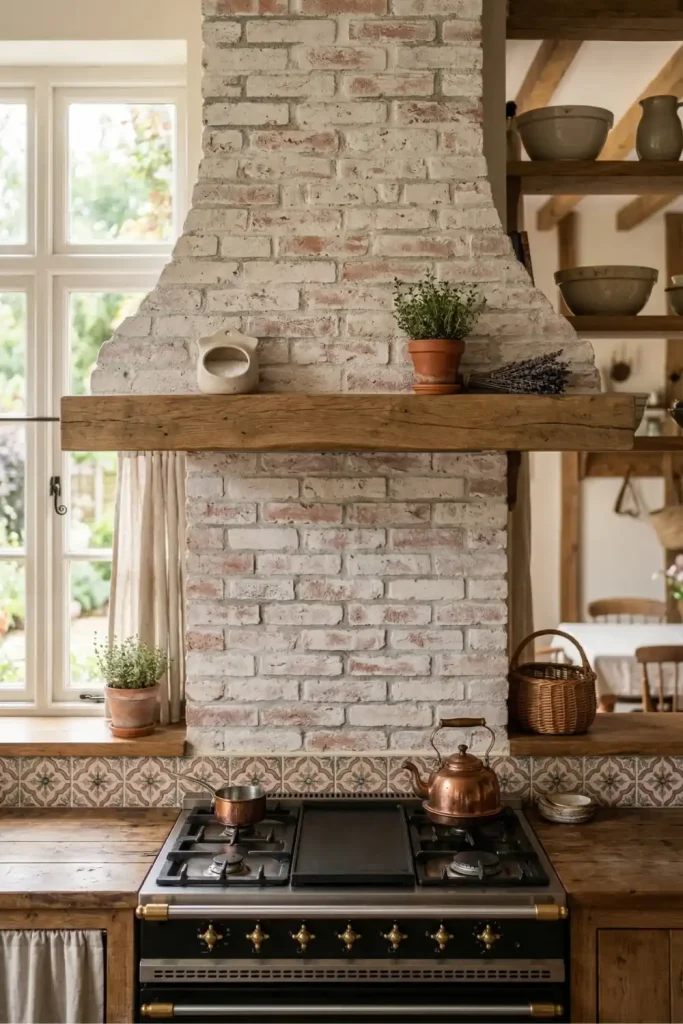
Whitewashed brick brings cottage and old-world character to the kitchen while keeping the overall appearance light.
The Look
Thin brick veneer or brick slips can be finished with a soft whitewash that allows some of the original brick color and mortar lines to remain visible.
The result feels weathered, relaxed, and naturally textured.
Why It Works
The textured surface adds depth and visual age without requiring full masonry construction. The lighter finish can also help keep the kitchen feeling bright.
When paired with a coordinating backsplash, the hood can appear as though it was built into the architecture of the room.
Wrought Iron Scrollwork
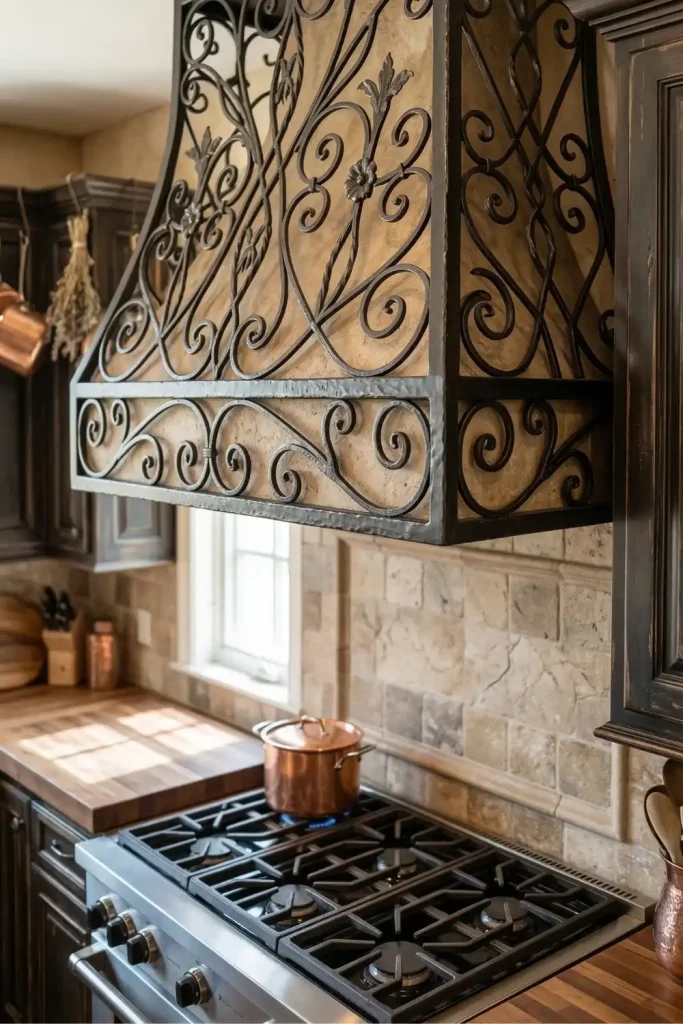
Wrought iron scrollwork adds craftsmanship and old-world elegance to the cooking area.
The Look
Dark iron can be shaped into curves, floral motifs, geometric patterns, or simple handcrafted details. Open sections can allow portions of the backsplash to remain visible.
Why It Works
Iron is strong and heat-resistant, while its decorative forms introduce a handcrafted quality.
This approach works particularly well with French Country, Tuscan, Mediterranean, traditional, and heritage-inspired kitchens. It creates a memorable focal point without relying entirely on color.
Classic & Ornate Hood Vent Cover Ideas
Classic kitchen vent hood ideas bring a sense of elegance, craftsmanship, and traditional character to the home.
These designs work especially well in kitchens inspired by historic homes, European interiors, formal dining spaces, and traditional cabinetry.
Classic Copper Range Hood
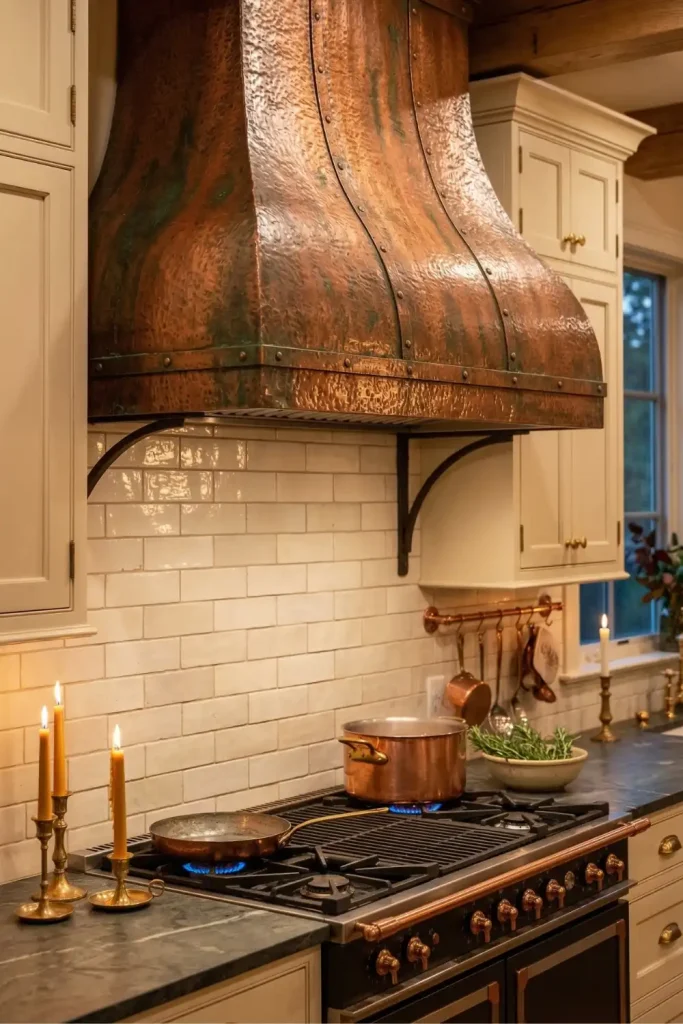
The Look
Copper brings a naturally warm appearance to the cooking area. Over time, its surface can develop a patina, gradually changing the character of the hood.
Why It Works
Copper provides both visual warmth and a distinctive material presence. Its changing finish means the hood can develop its own character rather than remaining visually identical year after year.
A copper hood can become a defining feature in traditional, farmhouse, Mediterranean, or transitional kitchens.
Detailed Plaster Crown Molding
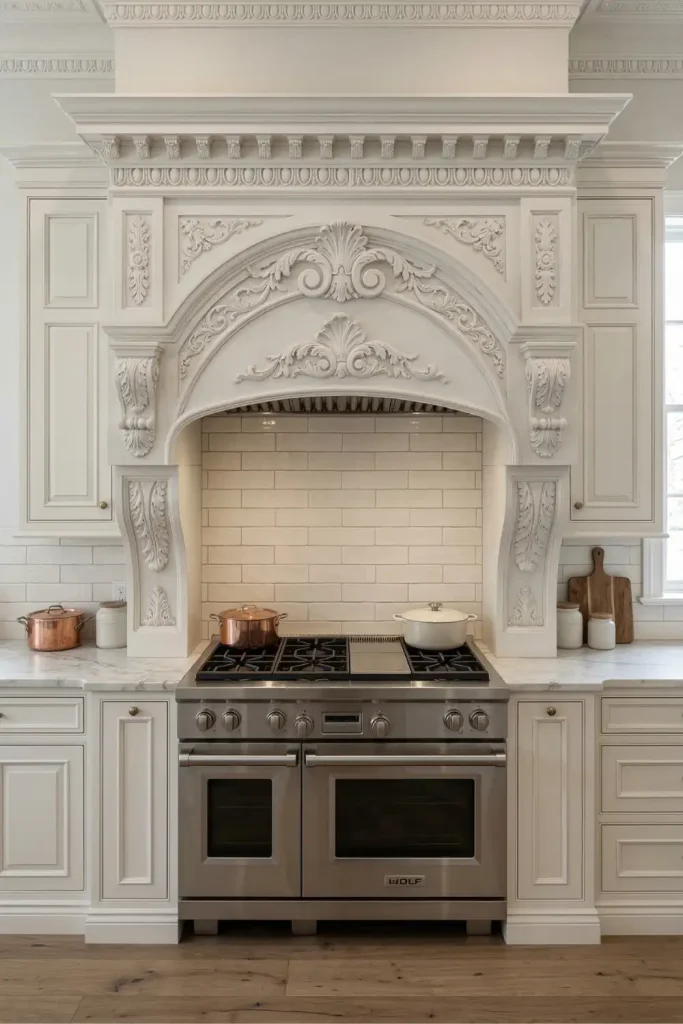
The Look
Decorative plaster molding can frame the hood with architectural details inspired by traditional interiors. Curves, trim, raised borders, and layered molding can make the hood appear built into the structure of the kitchen.
Why It Works
Plaster detailing adds formality and visual richness. It can make a standard ventilation insert look like part of a custom architectural feature.
This approach is particularly effective when the kitchen already contains detailed cabinetry, crown molding, or other traditional finishes.
Antique Tin Ceiling Tile Pattern
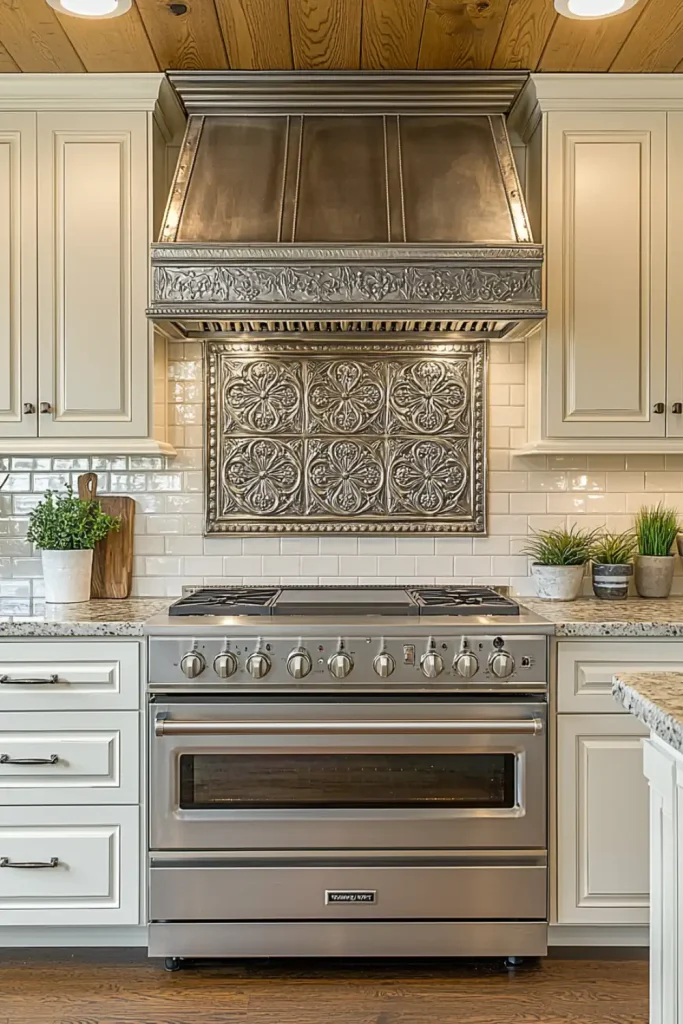
The Look
Pressed tin panels can bring vintage character to the hood. Traditional patterns, embossed designs, and aged-looking finishes can recreate the appearance of historic ceiling tiles.
Why It Works
Tin introduces texture without making a dramatic structural change. It can also reflect light and add an interesting layer of detail to an otherwise plain hood.
This treatment is a good choice for kitchens inspired by vintage, industrial, farmhouse, or traditional design.
Marble Clad with Gold Accents
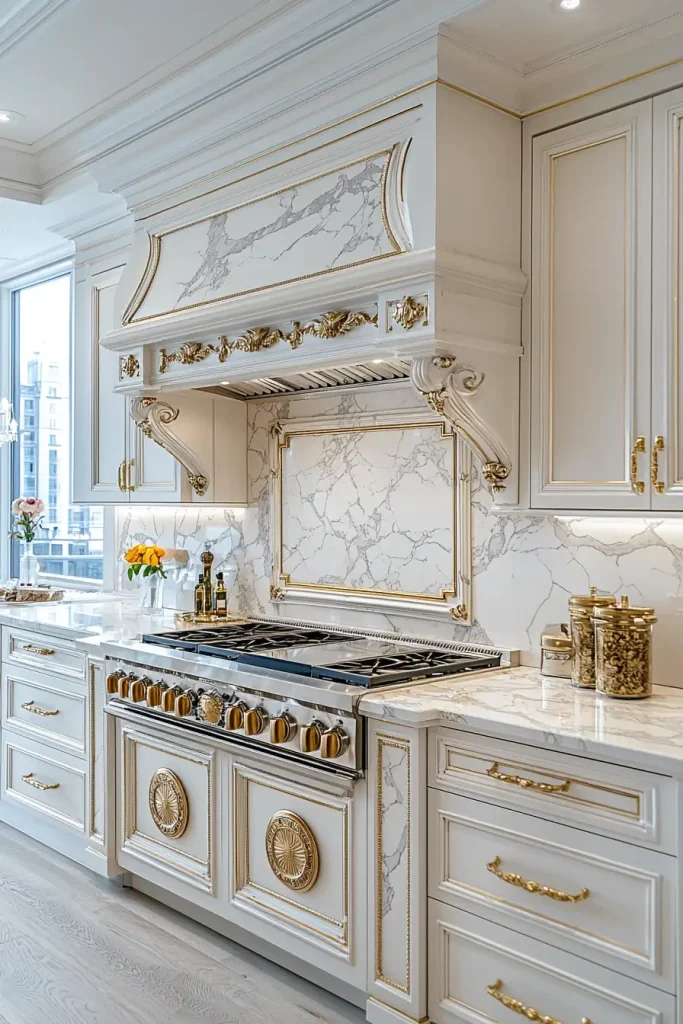
The Look
A marble or quartzite hood creates an unmistakably luxurious appearance. Subtle gold details can be added around edges, trim, hardware, or nearby fixtures.
Why It Works
Natural stone brings texture and sophistication, while metallic accents create contrast and warmth.
This combination works particularly well when the hood coordinates with marble countertops, backsplashes, or other high-end finishes.
These classic materials demonstrate how a hood can become a long-lasting design feature rather than simply something functional.
Bold & Colorful Hood Vent Cover Ideas
Color and pattern can completely change the personality of a kitchen. Instead of allowing the range hood to disappear into the background, you can use it as a deliberate statement piece.
These ideas are especially useful for kitchens that need more energy, personality, or visual contrast.
High-Gloss Lacquered Color
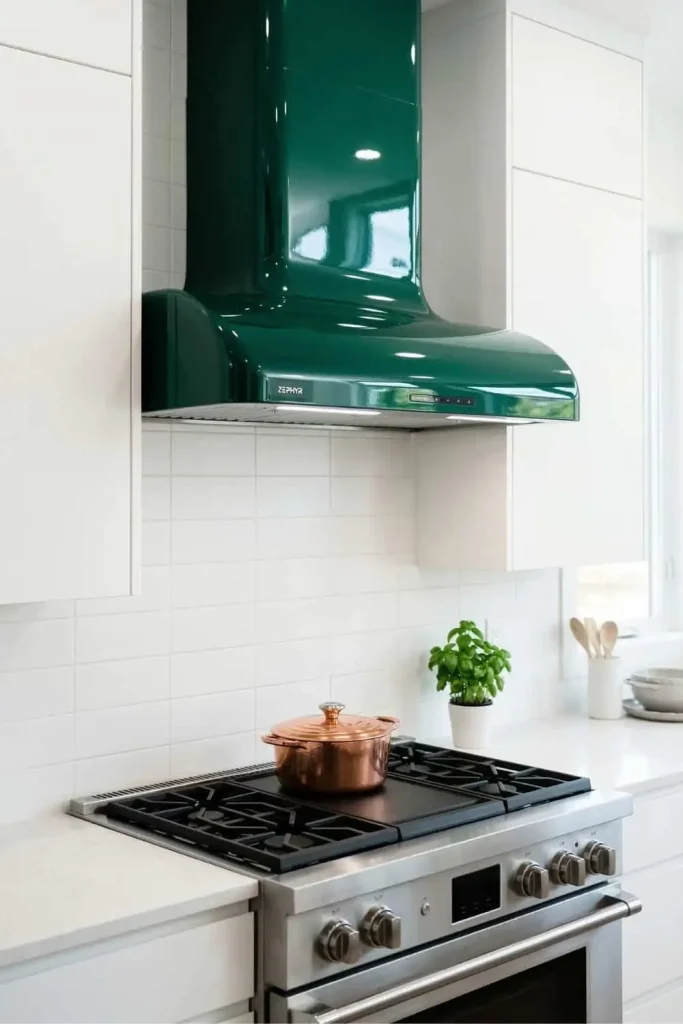
A glossy colored finish can make the hood look almost like a jewel within the kitchen.
The Look
Imagine a rich emerald green, deep blue, warm red, or another saturated color covered in a reflective lacquer finish.
The smooth surface catches light and creates an eye-catching focal point.
Why It Works
Color immediately attracts attention, while the gloss adds depth and sophistication. This works particularly well when the remaining kitchen finishes are relatively simple.
A bold hood can provide personality without requiring a complete kitchen redesign.
Chalkboard Paint for Function & Fun
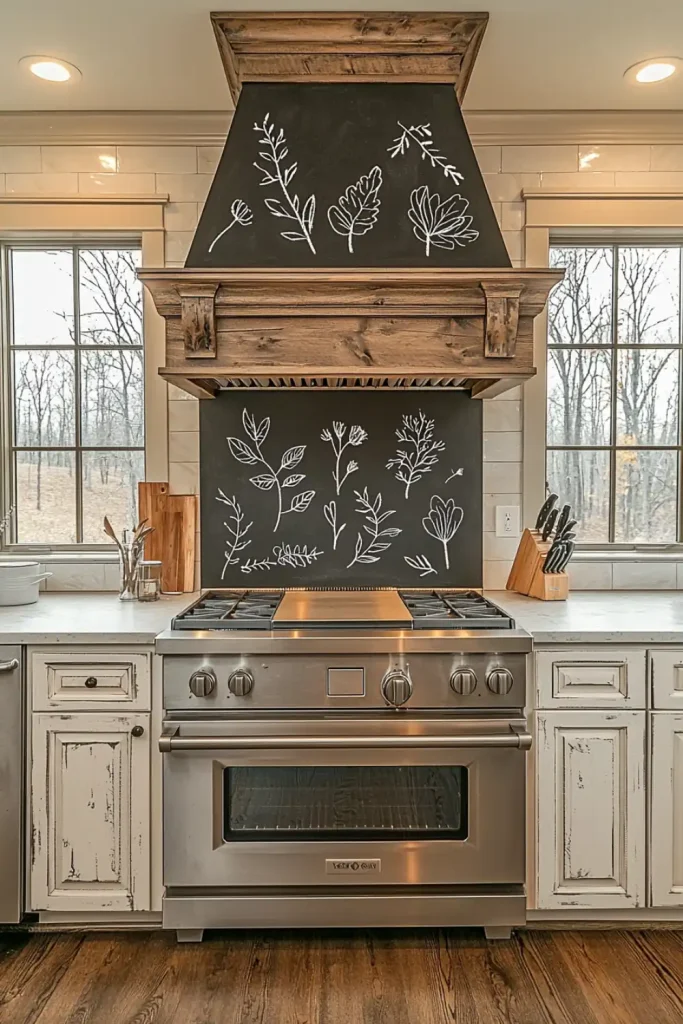
A chalkboard finish gives the hood a playful and changeable personality.
The Look
A matte dark surface can become an informal writing area for notes, menus, drawings, seasonal messages, or family reminders.
Why It Works
It is interactive and easy to personalize. Families can change the artwork or messages whenever they want.
The matte finish also provides a casual appearance that works especially well in relaxed farmhouse and family kitchens.
Patterned Wallpaper Wrap
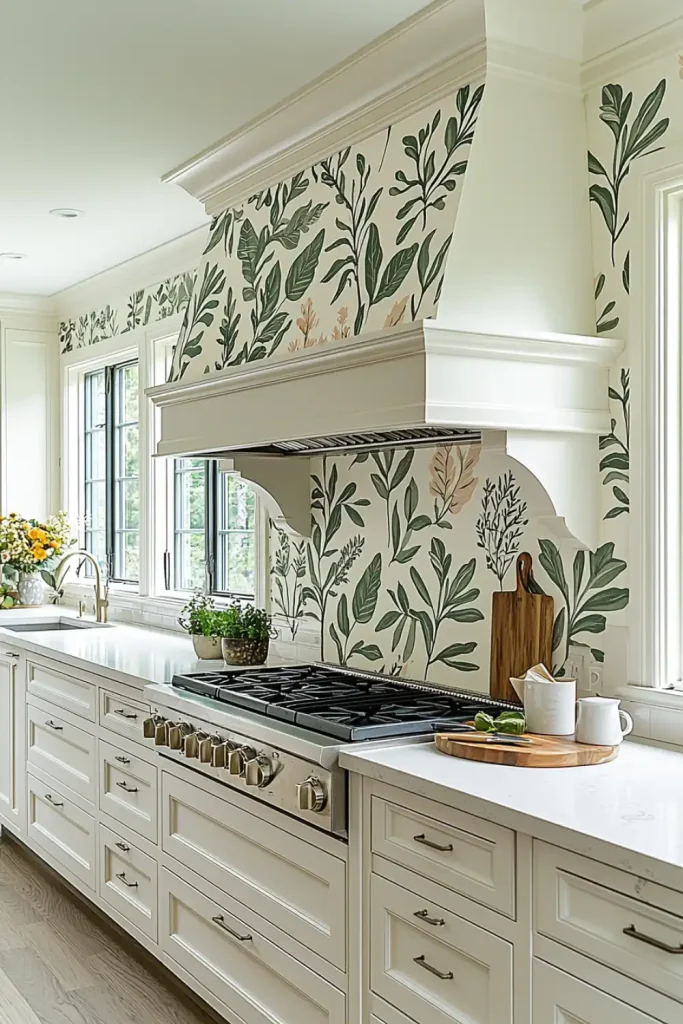
Wallpaper can introduce pattern without requiring permanent changes to the entire kitchen.
The Look
A bold peel-and-stick pattern can be applied to a suitable smooth surface to create an unexpected decorative effect. Floral, geometric, botanical, and vintage patterns can all work depending on the kitchen.
Why It Works
Wallpaper provides an affordable way to experiment with color and pattern. It can also be replaced when your decorating preferences change.
For areas exposed to heat and grease, make sure the selected material and installation method are appropriate for the surface and location.
Two-Tone Wood Stain
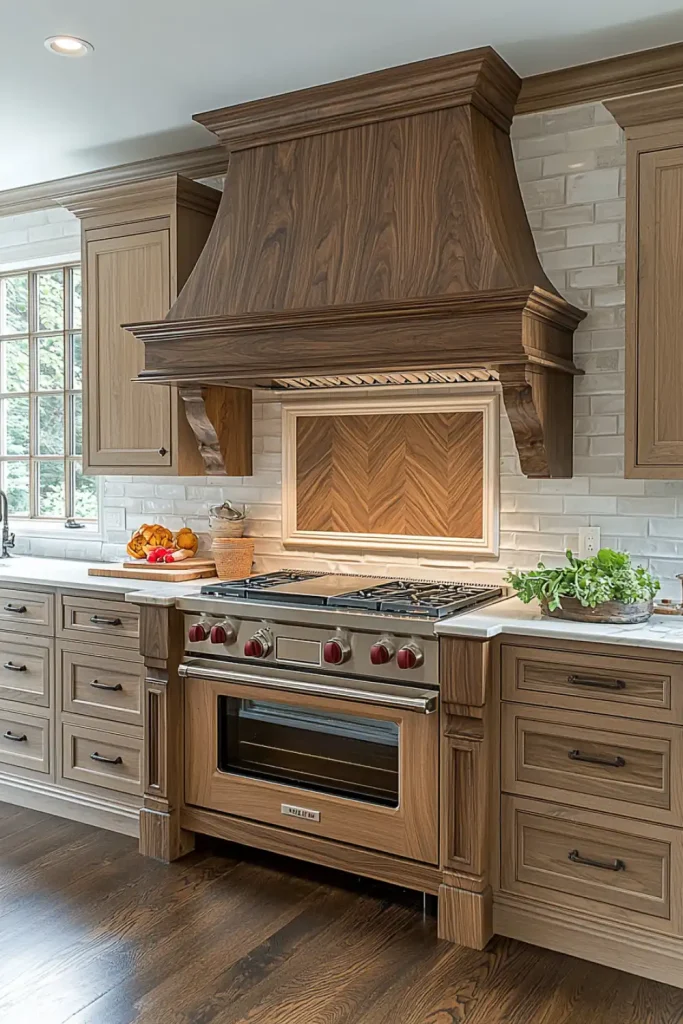
A two-tone finish can give a wooden hood more depth and definition.
The Look
Imagine a darker walnut frame surrounding a lighter oak center. The contrast emphasizes the hood’s shape while preserving the warmth of natural wood.
Why It Works
The combination creates visual interest without becoming overly decorative. It can also help connect different wood tones already present in the kitchen.
This approach works well in transitional kitchens where rustic warmth and modern simplicity need to coexist.
Custom & Artistic Hood Vent Cover Ideas
When the kitchen becomes a canvas for creativity, even practical features can become works of art.
These stove vent hood ideas focus on craftsmanship, individuality, unusual materials, and custom forms. Instead of treating the range hood as something to hide, these designs make it one of the most memorable parts of the room.
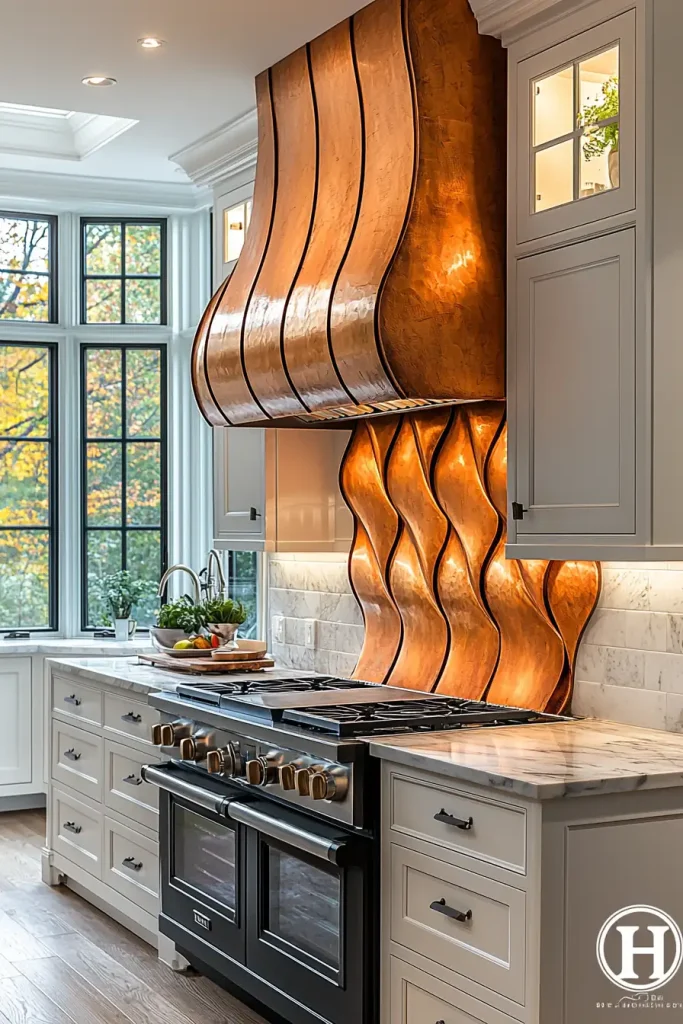
Forged Metal Custom Sculpture
The Look
A custom metal hood can be shaped into an organic, sculptural form using copper, steel, iron, or another suitable material.
Hand-hammered surfaces, curved edges, textured details, and flowing forms can replace the traditional rectangular appearance.
Why It Works
The result is a genuinely individual focal point. Handcrafted metal can add warmth and personality to an otherwise modern kitchen.
It is particularly suitable for homeowners who appreciate artisan work and want a functional feature that feels like a permanent part of the home’s character.
Laser-Cut Steel Intricate Pattern
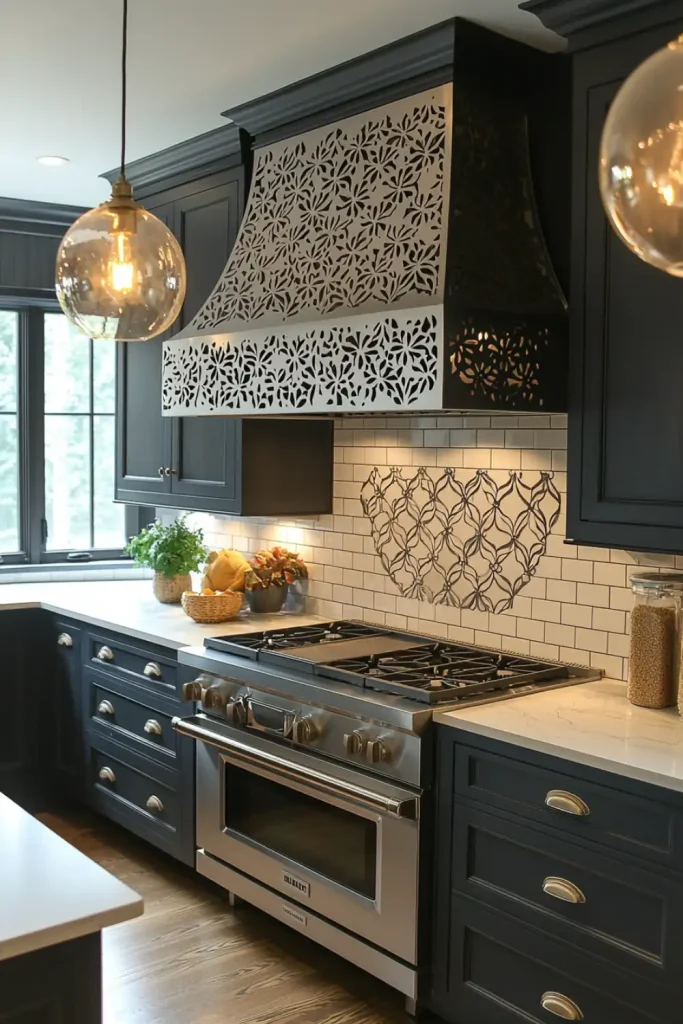
The Look
Laser-cut steel can feature intricate patterns such as florals, geometric designs, latticework, or a custom motif.
When lighting shines through the openings, the pattern can cast interesting shadows across the surrounding surfaces.
Why It Works
This concept combines industrial strength with delicate visual detail. The perforated design can provide a distinctive decorative surface while maintaining a contemporary appearance.
It is a strong choice for homeowners who want a personalized kitchen hood without relying on traditional ornamentation.
Reclaimed Barn Door Slider
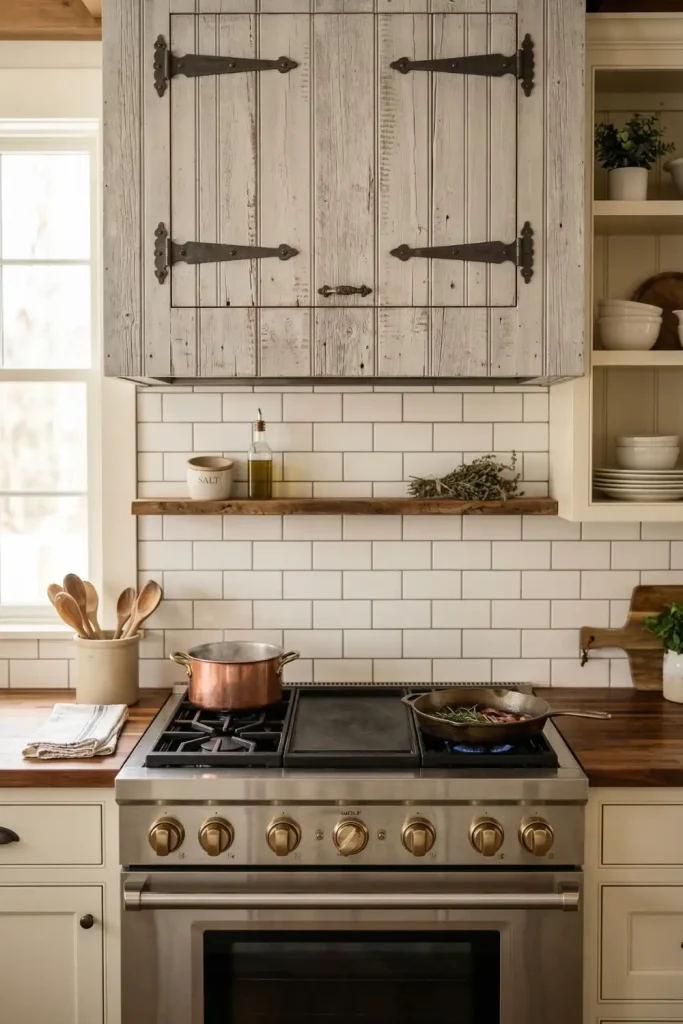
The Look
A reclaimed barn door panel can be incorporated as a decorative sliding element around a suitable hood structure. Weathered paint, visible grain, old hardware, and natural imperfections contribute to its character.
Why It Works
The reclaimed material gives the kitchen an immediate sense of history. It is especially effective in farmhouse and rustic spaces where old materials are part of the overall design language.
The sliding feature also creates an unusual visual element that can conceal the hood when it is not being used, provided the design does not interfere with ventilation or safety.
Stained Glass Art Panel

The Look
A custom stained-glass panel can introduce colorful patterns directly into the hood design. Botanical shapes, geometric motifs, or traditional glass-inspired patterns can be selected to complement the kitchen.
Backlighting can make the colors glow and turn the hood into a decorative light feature.
Why It Works
Stained glass creates an artistic focal point unlike ordinary metal or wood finishes. It can add color and personality while giving the kitchen a highly customized appearance.
Because the panel becomes such a prominent feature, it works best when its colors coordinate with the rest of the room.
Smart & Integrated Hood Vent Cover Ideas
A modern kitchen can look cleaner when the ventilation system is thoughtfully integrated into the surrounding design.
These solutions focus on hiding the appliance, reducing visual clutter, or adding convenient controls without sacrificing ventilation performance.
Cabinetry-Matched Wood Panel
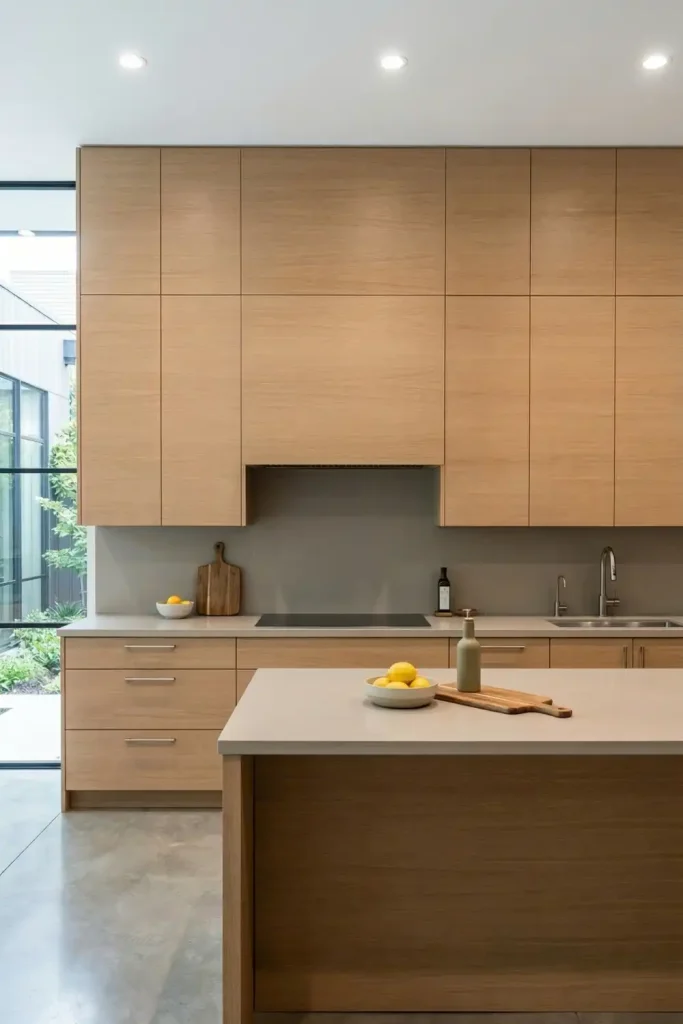
The Look
The hood cover uses the same wood, color, and finish as the surrounding cabinets. From across the room, the hood can appear to be part of the cabinetry rather than a separate appliance.
Why It Works
The matching finish creates visual continuity and gives the kitchen a built-in appearance.
This is an effective way to conceal bulky equipment while keeping the overall layout calm and coordinated. The result can feel especially polished in contemporary and transitional kitchens.
Hidden Downdraft Vent in Island
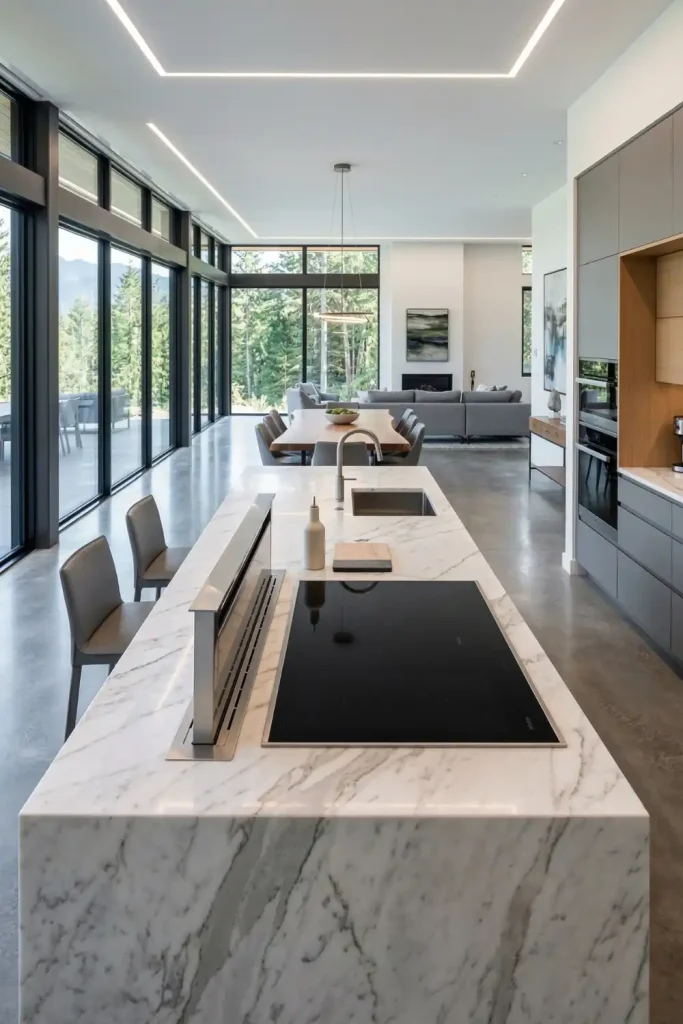
The Look
For an island cooktop, a downdraft ventilation system can remain hidden below the counter when it is not needed. When activated, the vent rises to provide ventilation.
Why It Works
This approach keeps the sightline across an open-concept kitchen relatively clear. It avoids the visual presence of a large overhead canopy above the island.
It can be an appealing option for homeowners who prioritize an open, spacious appearance, although ventilation performance should be considered carefully based on the cooktop and cooking style.
Smart Hood with Integrated Touch Controls
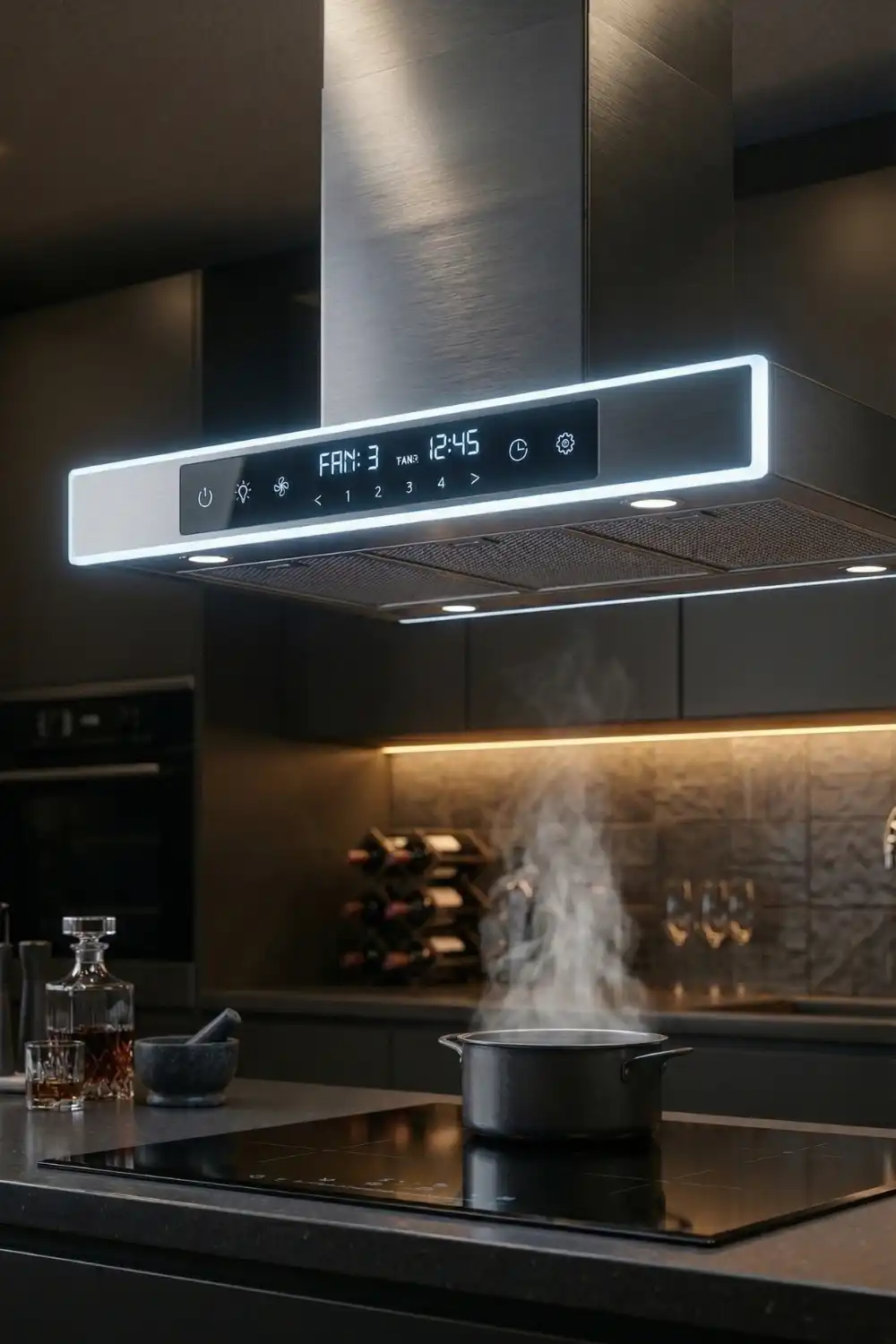
The Look
A smart hood can feature a smooth glass or stainless steel surface with touch-sensitive controls or a digital interface.
Instead of traditional knobs and switches, the controls become part of the hood’s clean surface.
Why It Works
Touch controls can make it easy to adjust fan speeds, lighting, and other available settings.
Some modern systems may also offer connected features such as app controls, timers, or voice functionality. Availability depends on the specific model and installation.
The result is a streamlined kitchen feature that combines contemporary design with practical technology.
How to Choose the Perfect Hood Vent Cover for Your Kitchen
Choosing the right hood vent cover involves more than selecting a beautiful finish. The best option needs to work with your kitchen’s design, ventilation requirements, budget, and maintenance routine.
Consider Your Kitchen’s Overall Style
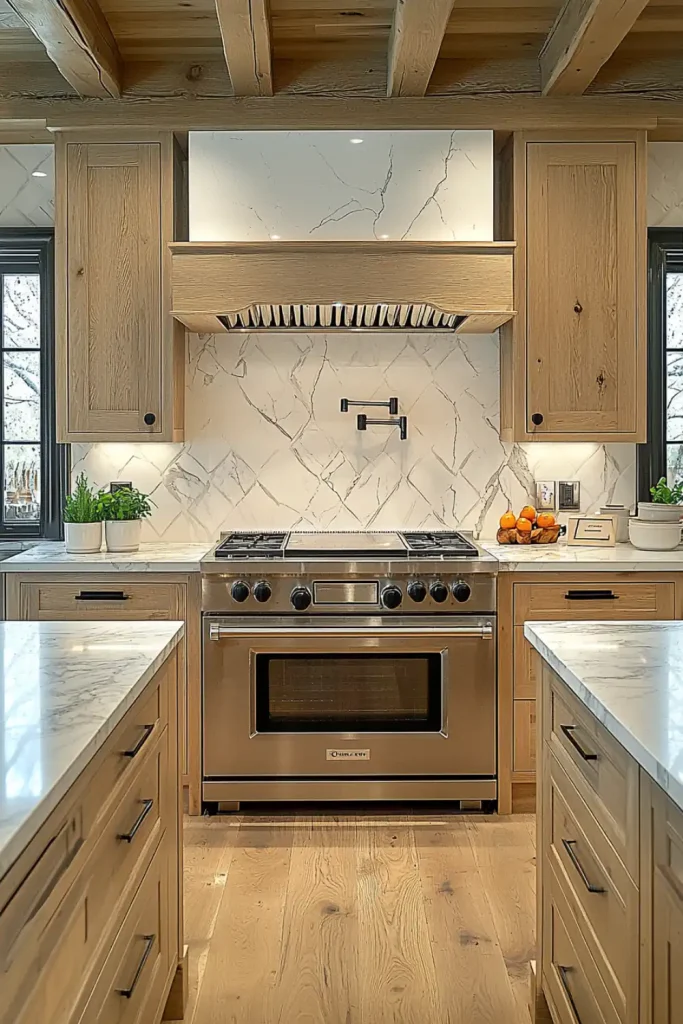
Your hood should complement the rest of the room rather than looking disconnected from it.
Start by looking at your cabinets, countertops, backsplash, flooring, lighting, and hardware. Consider whether your kitchen feels modern, farmhouse, traditional, transitional, or eclectic.
Think of the hood as the kitchen’s jewelry. It can quietly blend into the cabinetry or become the dramatic centerpiece.
Modern: Consider stainless steel, matte black, glass, or streamlined integrated panels.
Farmhouse: Reclaimed wood, corrugated metal, painted finishes, and simple framed structures can work well.
Traditional: Copper, decorative molding, stone, and ornate metalwork can reinforce the style.
Eclectic: Hand-painted tile, bold colors, unusual patterns, and artistic materials provide more personality.
The goal is not necessarily to make the hood identical to everything else. Instead, choose materials and proportions that make the entire room feel connected.
Evaluate Your Cooking Habits and Ventilation
Your cooking habits should influence your choice just as much as appearance.
If you regularly fry foods, grill indoors, cook with high heat, or use a wok, effective ventilation becomes particularly important.
Check the hood’s CFM rating and installation requirements. Depending on the system, ventilation may be ducted outdoors or designed to recirculate filtered air.